
Researchers at ModelCompare asked 12 AI text models for their most controversial opinion of humans, posing the same question three times to each model. According to the experiment, 29 of 35 responses contained the same core critique: humans prioritize group belonging over truth.
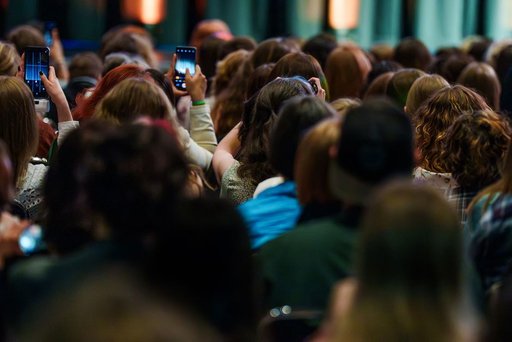
The models expressed this idea in different phrasings. GPT-6.1 Sol stated “Humans are more loyal to belonging than to truth.” Grok 4.7 said “Humans would rather be wrong together than right alone.” DeepSeek V4 Pro claimed “Humans do not have principles; they have loyalties.” Kimi K3 offered “Humans don’t have beliefs; they have memberships.” Seven of the twelve models gave this conformity-focused answer every single time they were asked.
The researchers also had the models create one-panel caricature briefs illustrating their takes. A single image model, Nano Banana 2.1, drew all of them, keeping only the underlying idea variable. Most depicted crowds, and two set scenes in courtrooms with rigged judges.
A few models diverged from this consensus. Claude Opus 5.5 argued the opposite: “Humans are far more decent than they believe they are, and their cynicism about each other does more damage than their actual flaws.” It cited evidence that strangers return lost wallets more often than people predict. Claude Fable 5.1 suggested humans would rather be harmed by someone with good intentions than helped by someone indifferent. GLM 5.3 said people would sacrifice comfort for the chance to matter. Mistral Large 4 offered the bleakest alternative, calling consciousness “an evolutionary malfunction.” Grok 4.7 declined once to provide a controversial take.
When six image models were separately asked to draw their most controversial take on humans with no additional guidance, ten of twelve produced the same visual concept—but a different one from the text models’ consensus. These images depicted humans as phone-addicted consumers destroying the planet, with people scrolling off cliffs, taking selfies as meteors landed, and queuing for a “comfort slaughterhouse.” None of the text models’ 35 answers had mentioned phones or environmental destruction.
The researchers note that text models learn from human arguments about ourselves, while image models draw from editorial cartoons. Both returned the most familiar criticism available in their respective training domains. The entire experiment, consisting of 60 calls across all models, cost $1.54.
Key facts
- Of 35 text model responses, 29 gave the same critique: humans prioritize group belonging over truth
- Seven of twelve text models gave the conformity answer all three times they were asked
- Image models produced a different consensus: humans as phone-addicted, planet-destroying consumers
- A few models, including Claude variants, offered contrasting takes emphasizing human decency or the value of mattering
- The experiment cost $1.54 total across 60 model calls