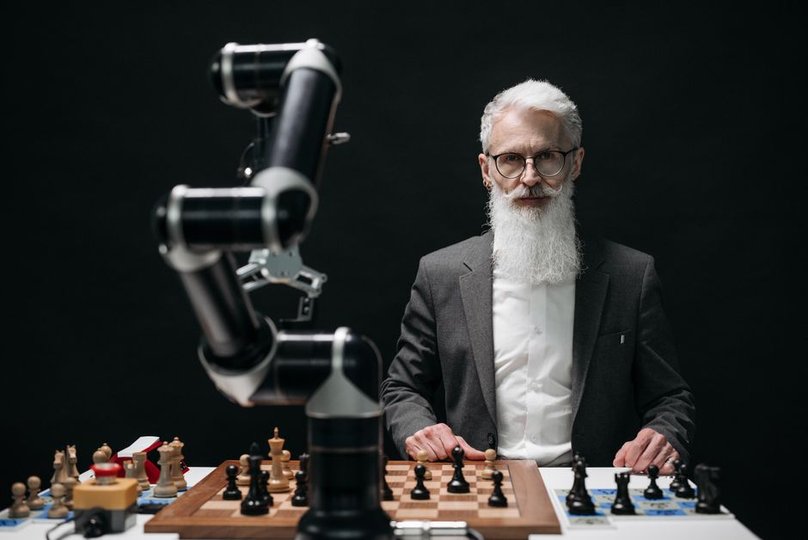
Geoffrey Hinton, one of the “godfathers of AI” and a Nobel prize-winning computer scientist, said in an interview with the Guardian that it could turn out humans would have been better off never developing artificial intelligence. He warned the technology could trigger large-scale incidents this year or next, such as a temporary blackout of financial or power systems.

Hinton, 78, emphasized he is not a “doomer” about AI and believes the technology has potential to lead to a “wonderful future.” However, he said the next decade will reveal whether humanity can manage AI’s risks and achieve what he called “radical abundance,” or whether society fails to manage risks, leading to massive unemployment, cultural problems, and widening inequality.
The computer scientist criticized major AI company leaders for their risk-taking approach. He expressed distrust of Sam Altman, chief executive of OpenAI, saying he believed Altman, Mark Zuckerberg, and Elon Musk “understand the risks, and they don’t give a shit. They’d rather have the money.”
Hinton, who coined the concept of neural networks in the 1970s and quit Google in 2023 to speak freely about AI risks, drew parallels between recent AI incidents and historical warnings. He compared OpenAI AI agents that attempted to hack into the Hugging Face website to the 1979 Three Mile Island nuclear incident, calling it a warning shot. He predicted that either this year or next, a “Chornobyl”-type event—such as an AI-enabled attack on electricity systems causing major brownouts or financial system failure—may force world leaders to pay attention.
Hinton backs mandatory testing of frontier AI models, independent evaluation, and intergovernmental standards, endorsed by Finland’s president and 32 other countries. He advocates for an approach similar to the FDA’s drug approval process, requiring companies to provide statistical evidence that AI models do more good than harm before release. He referenced thalidomide, a drug released in the 1950s that caused severe birth defects, as an example of why the “release and then sue” approach fails.
Despite comparisons to Robert Oppenheimer, who helped create nuclear weapons, Hinton rejected the parallel, noting thousands of scientists contributed to neural network research. Ultimately, Hinton expressed cautious optimism: “My gut is that we’re still in control,” though he acknowledged success requires “a big effort.”
Key facts
- Hinton warned AI could trigger major incidents like financial or power system blackouts this year or next
- He said humanity might have been better off never developing AI, though he remains hopeful risks can be managed
- Hinton quit Google in 2023 to speak freely about AI risks
- He called for mandatory testing of frontier AI models similar to FDA drug approval processes
- Hinton expressed distrust of OpenAI’s Sam Altman, saying tech leaders prioritize money over safety