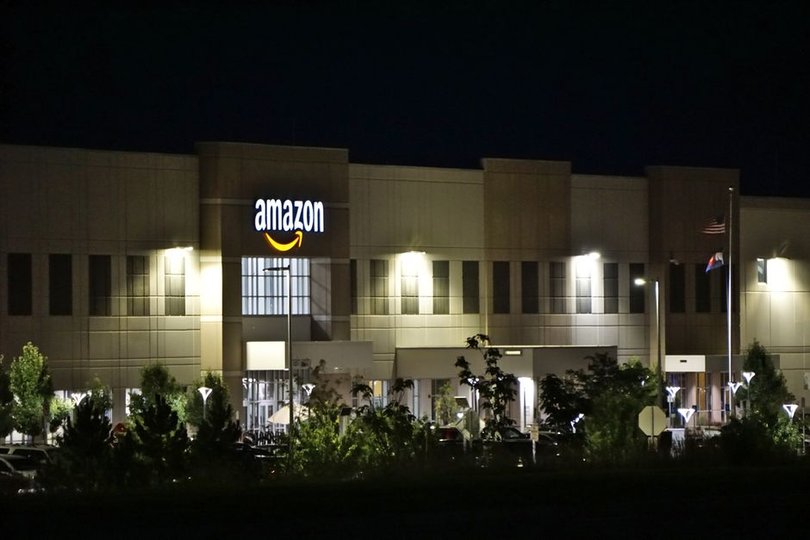
Amazon uses an in-house AI forecasting tool called Atlas to predict the likelihood that warehouse workers will attempt to form unions or stage strikes, according to internal documents made public during a court battle with a Canadian union.
The tool assigns warehouses a risk score between 100 and 900 based on what Amazon describes as “hundreds of data points,” including posts on Reddit forums, employees’ responses to internal feedback surveys, and records of previous industrial action. Lower scores indicate higher perceived risk of unionization or disruptive labor events, according to the documents, which appear to be training resources for Amazon managers in Canada.
Warehouses are categorized into five tiers based on their Atlas scores, ranging from Tier 5 (“no immediate perceived risk”) to Tier 1 (“future activity is imminent”). The company suggests this classification can inform “staffing decisions, resource planning, standard actions, and ownership to mitigate risks to Amazon labour structure.”
According to the documents, 16 Amazon warehouses across the US, Canada, and the UK are classified as Tier 1. Two are in the UK: a robotic fulfillment center in Sutton Coldfield, northeast Birmingham, and a warehouse near Coventry where employee Garfield Hylton works. Hylton, who is a GMB union member, expressed concern about the power imbalance created by such surveillance, stating workers should be allowed to decide whether to unionize without monitoring interference.
Amazon disputed characterizations of Atlas as employee surveillance, telling openDemocracy that it operates at “site/building level only” and does not track individual employees’ opinions, affiliations, or union membership. The company stated the tool helps identify where workers “need more support” and to address issues they raise. Amazon also told openDemocracy that Atlas is not currently used in the UK, though it had not responded to questions about whether similar systems operate under different names.
The disclosure comes as GMB, the union representing British Amazon workers, has pursued unionization efforts at UK warehouses. In July 2024, Coventry workers came closest to winning formal recognition but lost a ballot by just 28 votes in 2023, after employees conducted the first UK strike against Amazon in January 2023. The union and tech justice non-profit Foxglove have accused Amazon of using “dirty tricks” to influence votes, including mass hiring of non-unionized workers and placing QR codes allowing workers to cancel union membership in visible warehouse locations.
A French data watchdog previously fined Amazon €32 million in 2022 for tracking worker activity so precisely that alerts triggered if employees were inactive for one to ten minutes, breaching GDPR rules.
Key facts
- Amazon’s Atlas AI tool predicts warehouse-level unionization risk by analyzing social media posts, internal surveys, and workplace data, assigning scores from 100-900
- Two UK warehouses—in Sutton Coldfield and Coventry—are classified as Tier 1, indicating “future activity is imminent” for union organizing
- Amazon told openDemocracy that Atlas is not currently used in the UK and characterized the tool as site-level activity, not individual employee monitoring
- The GMB union narrowly lost a 2023 recognition ballot at the Coventry warehouse by 28 votes after the first UK Amazon worker strike in January 2023
- France fined Amazon €32 million in 2022 for excessive worker surveillance under GDPR rules