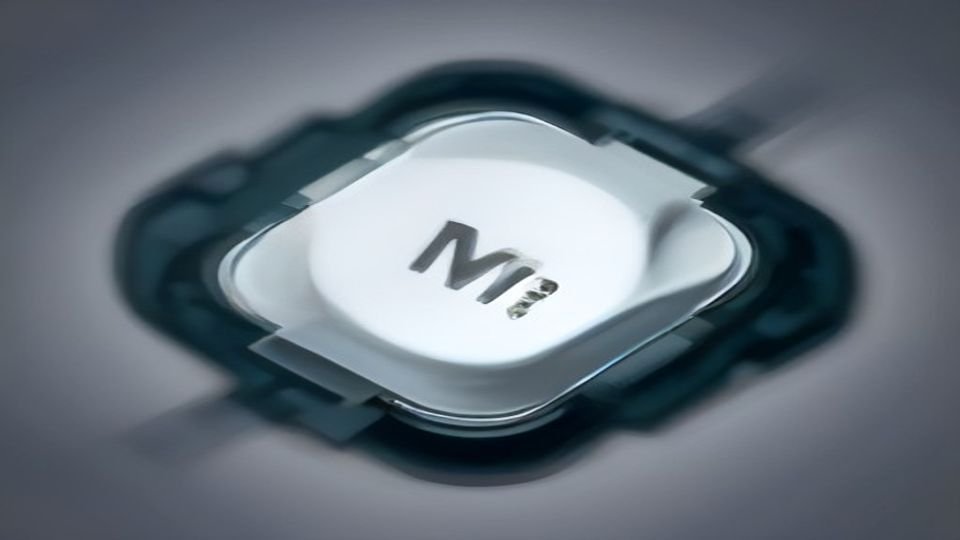
Apple introduced M6 and M5 Ultra chips on August 25, 2026, marking significant advances in desktop computing performance and artificial intelligence capabilities.
The M6, Apple’s first 2-nanometer chip, powers the new Mac mini and delivers improvements across CPU, GPU, and neural processing. According to Apple, it features a 12-core CPU with two additional cores compared to M5, delivering up to 1.2x faster multithreaded performance compared to M5 and up to 2.4x faster than M1. The CPU complex consists of 2 super cores, 4 performance cores, and 6 efficiency cores designed to balance single-threaded and multithreaded workloads.
The M6 includes a 12-core GPU with Neural Accelerators in each core, providing nearly 30 percent higher peak GPU compute for AI compared to M5. It also introduces a Dual 16-core Neural Engine—double the capability of previous generations—to enable faster on-device AI workflows. The chip supports up to 32GB of unified memory and provides 170GB/s of unified memory bandwidth, representing a 10 percent increase over M5.
The M5 Ultra, launching in the new Mac Studio, represents Apple’s most powerful chip to date. It uses a quad-die architecture—a first for M-series chips—connecting two dual-die M5 Max chips through next-generation UltraFusion technology. This design delivers inter-die bandwidth exceeding 4.4TB/s and increases connection density by over 6x.
According to Apple, M5 Ultra features up to 36 CPU cores (12 super cores and 24 performance cores) and up to 80 GPU cores, each with Neural Accelerators. The chip delivers 1.25x higher single-threaded and 1.3x higher multithreaded performance than M3 Ultra. It provides up to 4.5x the peak GPU compute for AI compared to M3 Ultra.
M5 Ultra supports up to 512GB of unified memory with 1.2TB/s of unified memory bandwidth—50 percent higher than M3 Ultra. The chip includes a 32-core Neural Engine and dedicated media engines supporting H.264, HEVC, ProRes, and hardware-accelerated AV1 decode for video editing applications.
Apple states both chips deliver “industry-leading power efficiency” and are designed to support demanding workloads including 3D rendering, visual effects, scientific analysis, and running large language models on device.
Key facts
- M6 is Apple’s first 2-nanometer chip with a 12-core CPU and Dual 16-core Neural Engine
- M6 delivers up to 1.2x faster multithreaded performance than M5 and up to 2.4x faster than M1
- M5 Ultra features a quad-die architecture with up to 36-core CPU and up to 80-core GPU
- M5 Ultra provides 1.2TB/s unified memory bandwidth, 50 percent more than M3 Ultra, and supports up to 512GB unified memory
- M6 GPU provides nearly 30 percent higher peak GPU compute for AI compared to M5