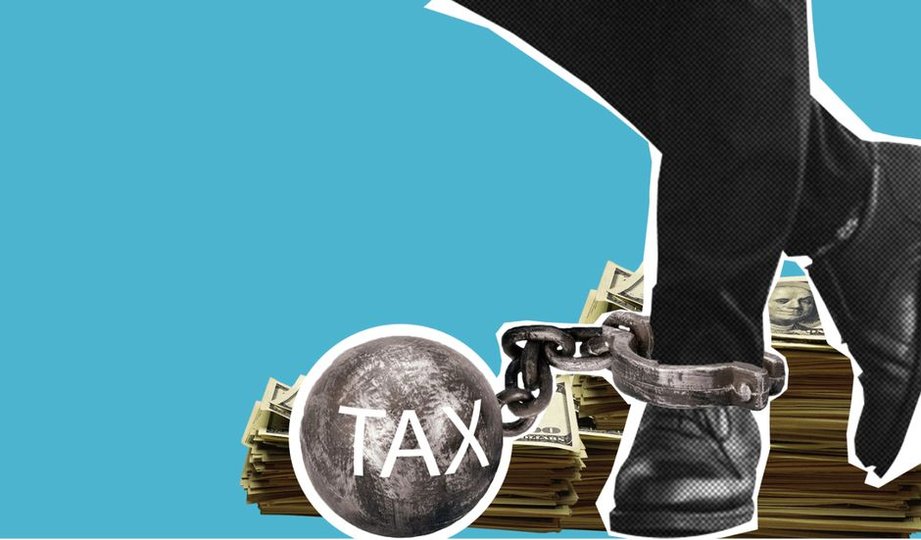
California has certified a Billionaire Wealth Tax for the November ballot—a 5 percent one-time levy on the state’s billionaires, paid over five years, intended to raise about $20 billion annually for health care, food aid, and schools. But according to analysis from the Center for Land Economics, the tax faces a fundamental challenge: billionaires have mobility that land does not.
The wealth tax’s own projections assume a $2 trillion base. However, six billionaires—Larry Page, Sergey Brin, Peter Thiel, Don Hankey, Travis Kalanick, and Steven Spielberg, worth roughly $540 billion combined—had already moved their tax residency out of state before the measure’s January 1, 2026 cutoff. Mark Zuckerberg, worth about $220 billion, followed in early 2026 and is likely to challenge the retroactive reach in court. Accounting for these departures plus a roughly $200 billion overestimate flagged by other economists, nearly half the assumed base is already gone.
To still raise $20 billion against the remaining base, the tax rate would need to climb from 1 percent toward 1.6 or 1.9 percent depending on legal outcomes. This creates what analysts call a trap: raising rates to chase those who left incentivizes those who remained to follow them out.
The Center for Land Economics proposes an alternative: a land value tax of just 0.25 percent on California’s estimated $8.14 trillion in total land value would raise the same $20 billion annually. According to the report, land represents one of the state’s largest wealth pools and cannot leave the state.
A land value tax would apply solely to land value rather than buildings, making it impossible to avoid by relocating. The analysis notes that because land value is concentrated in prime coastal lots and downtown blocks, the burden would fall hardest on the wealthy while barely affecting working families’ homes in the Central Valley.
The broader context traces to Proposition 13, passed in 1978, which capped property taxes and froze assessed values until a property sells. The Center for Land Economics estimates California now assesses property at between 44 and 60 percent of actual value, effectively choosing not to collect roughly half its real-estate tax base. As property revenue fell, income taxes rose to fill the gap, creating California’s current highest-in-the-nation income tax rate and a revenue base vulnerable to emigration when rates increase.
Key facts
- California’s Billionaire Wealth Tax assumes a $2 trillion base, but wealth flight and modeling overestimates have reduced it by nearly half
- Six billionaires worth $540 billion had already moved tax residency out of state before the measure’s January 1, 2026 cutoff
- Mark Zuckerberg, worth about $220 billion, moved residency in early 2026 and is likely to challenge the tax retroactively
- California’s total land value is estimated at $8.14 trillion and cannot leave the state
- A 0.25% land value tax could raise the same $20 billion annually without facing wealth flight challenges
- Proposition 13 in 1978 froze property tax assessed values, resulting in properties assessed at 44-60% of actual worth