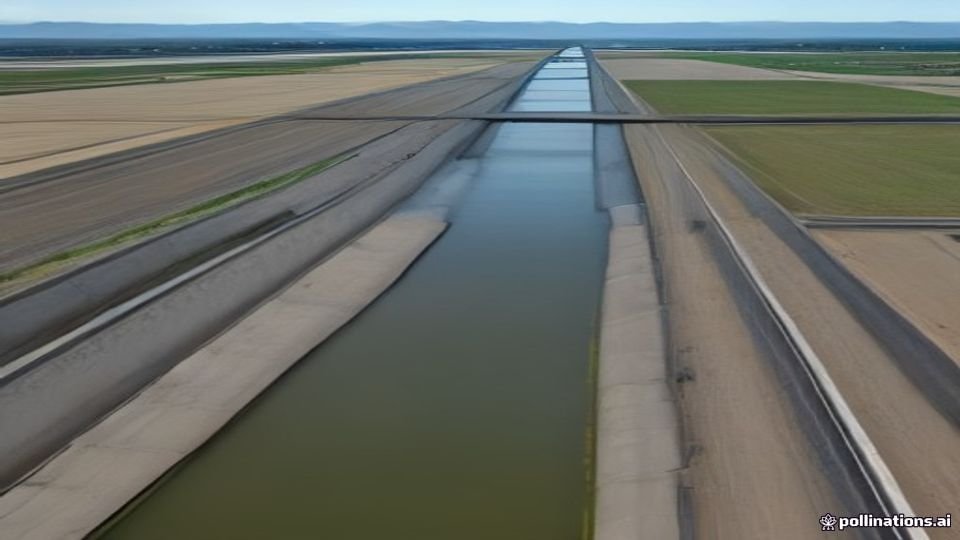
California’s extensive network of canals transports water across the state to cities and farms, but researchers at UC Davis estimate the state’s total water supply could shrink by up to 25% by 2050 due partly to climate change-driven temperature increases. The state currently generates 62% of its electricity from renewable and zero-carbon sources but requires unprecedented expansion of solar capacity to meet its 100% clean electricity goal by 2045.
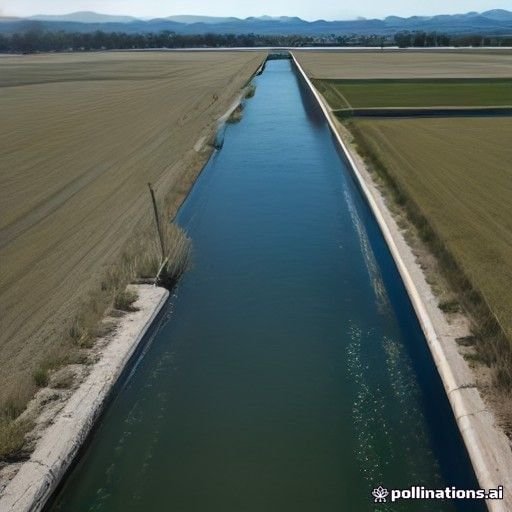
Jordan Harris, inspired by tree-lined canals in France that protected water from evaporation, proposed covering California’s 4,000 miles of open canals with solar panels. He and Robin Raj founded Solar Aquagrid and partnered with Turlock Irrigation District, UC Merced, and the California Department of Water Resources to launch Project Nexus, a pilot testing three different solar canal models: a wide-span canopy resembling a barn roof over a 115-foot canal, slanting panels on a 20-foot canal, and accordion-like retractable panels on narrow sections.
According to Roger Bales, a UC Merced professor who co-authored research that helped secure state investment, covering 100 miles of Turlock’s narrow canals could save enough water annually for 2,700 households, while the same coverage of wide canals could serve 11,000 households. The panels could generate 330 to 1,400 megawatts per hundred miles—sufficient to power 77,000 to 304,000 households.
Beyond water and energy, researchers identified “co-benefits.” Shading reduced algal and aquatic weed growth, lowering maintenance costs and improving water quality. Solar development on canals also preserves natural land; acquiring permits for undeveloped land averages 621 days compared to 110 days for developed sites, per The Nature Conservancy.
However, implementation faces substantial hurdles. California’s canals are managed by state, federal, local, and irrigation district agencies that often lack land ownership or power transmission infrastructure. Harris noted that transmission costs represent one of renewable energy’s most expensive components. Turlock Irrigation District proved an ideal partner as one of four California irrigation districts providing both water and retail power. The project received a $20 million state grant, generating just 1.7 megawatts—a fraction of Turlock’s 56-megawatt desert solar farm.
Not all regions can replicate the model. Contra Costa County’s canal system, built in the 1930s through now-urban areas including backyards and parks, makes solar canal projects impractical due to maintenance access requirements and safety concerns. The county is exploring piping canals instead to prevent evaporation.
Key facts
- UC Davis researchers estimate California’s water supply could shrink 25% by 2050 due to climate change
- Project Nexus tests three solar panel designs over Turlock Irrigation District canals
- Covering 100 miles of narrow canals could save water for 2,700 households annually; wide canals could serve 11,000 households
- Solar panels reduce algal growth and aquatic weeds while generating renewable electricity
- Turlock Irrigation District received a $20 million state grant for the pilot project