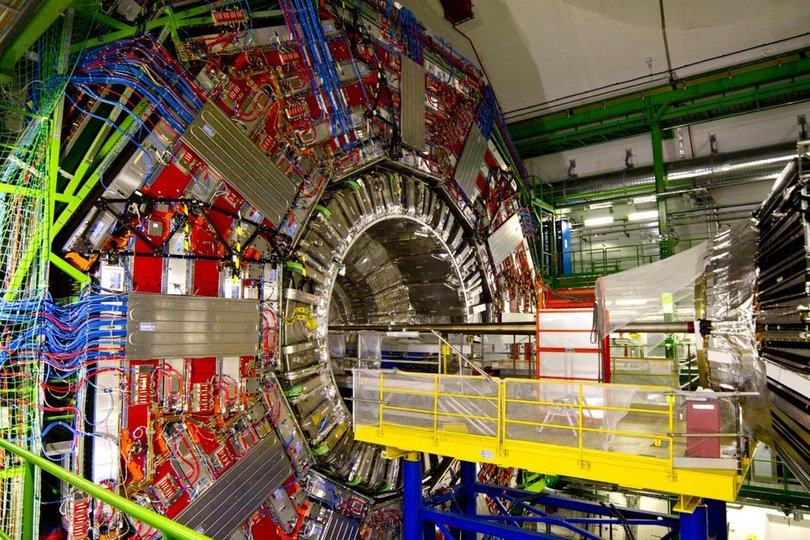
CERN, the European Laboratory for Particle Physics, and Mistral, a European AI developer, have signed a statement of intent to establish a long-term strategic partnership focused on developing foundation models for scientific discovery.
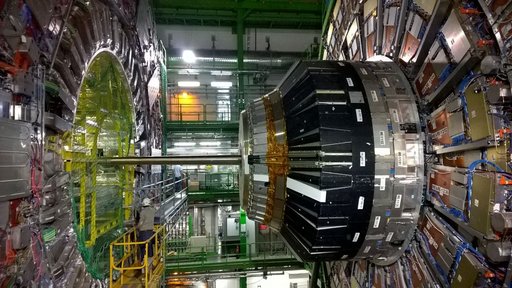
The collaboration combines CERN’s expertise in fundamental physics, scientific data management, and large-scale computing with Mistral’s capabilities in large-scale model training. While the initial focus is on high-energy physics, the partnership could eventually contribute to AI approaches serving the broader scientific community.
The centerpiece of the partnership is the development of a single pretrained Large Physics Model—described as the first foundation model for collider physics. According to CERN, the model will be trained on billions of simulated proton-proton collisions from CERN’s Large Hadron Collider (LHC), the world’s largest and most powerful particle accelerator. The model is designed to support multiple tasks, including reconstructing particle collisions, identifying particles, flagging unexpected signals, and evaluating future detector designs.
The foundation model addresses a key challenge in LHC collision analysis. Currently, reconstruction relies on a chain of specialized algorithms that progressively transform detector signals into particles and objects used for physics analysis. Machine learning has historically improved performance across specialized tasks, but foundation models offer the potential to learn across the entire reconstruction chain and support multiple tasks within a single system.
CERN stores approximately one exabyte—one million terabytes—of experimental LHC data to date. This volume is expected to grow substantially when the High-Luminosity LHC (HL-LHC) begins operation around 2030, with collision numbers projected to increase tenfold. According to Enrica Porcari, CERN’s Chief Information Officer, this combination of scale and scientific precision provides “exceptional conditions for developing and testing AI.”
“High-energy physics provides a unique environment in which artificial intelligence can be developed and tested with exceptional rigour,” Porcari stated, emphasizing CERN’s commitment to developing capabilities that can serve the entire physics community.
Johannes Brandstetter, Vice-President of AI for Engineering at Mistral, said the partnership offers “the opportunity to push the frontiers of high-energy physics, developing AI capabilities that have the potential to lead to new scientific discoveries.”
The partnership represents an effort to consolidate European excellence in AI and fundamental science, according to the announcement.
Key facts
- CERN and Mistral signed a statement of intent to develop foundation models for scientific discovery
- The partnership will create the first foundation model for collider physics, trained on billions of simulated proton-proton collisions
- CERN currently stores approximately one exabyte of experimental LHC data
- The High-Luminosity LHC is expected to increase collision numbers tenfold when it begins operation around 2030
- The foundation model is designed to handle multiple tasks including particle reconstruction, identification, signal detection, and detector design evaluation