
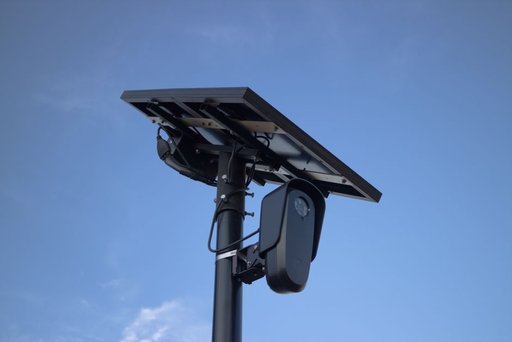
The Trump administration is using the High Intensity Drug Trafficking Area (HIDTA) program, an anti-drug trafficking grant initiative from the 1980s, to compel cities across the United States to send their automated license plate reader (ALPR) data to federal surveillance centers, according to public records and court documents reviewed by 404 Media. The records show that local police departments’ Flock, Axon, and other ALPR cameras feed data into HIDTA intelligence centers, where it is aggregated on federal government servers and made accessible to other federal, state, and local law enforcement agencies. In some cases, the data is then shared with the Drug Enforcement Agency’s National License Plate Reader Program (NLPRP).
HIDTA falls under the jurisdiction of the White House’s Office of National Drug Control Policy (ONDCP), which recently received a Trump White House award for “managing an automated license plate reader platform that brings together all levels of law enforcement.” The program raises privacy and transparency concerns because it allows federal agencies to access ALPR data without direct contracts with the camera vendors, effectively bypassing local restrictions and democratic oversight.
Cris van Pelt, creator of HaveIBeenFlocked.com and its investigative blog Footnote4a, obtained many of the documents via public records requests. He said, “When local police and private vendors promise community control over surveillance, they obscure a broader agenda. The DEA and ONDCP are already aggregating local data behind the scenes. This bypasses democratic processes entirely. The public has made it clear that mass surveillance violates fundamental rights, even when it is laundered through fragmented systems, private companies, and regional task forces.”
Jeramie Scott, director of the Electronic Privacy Information Center’s Surveillance Oversight Center, told 404 Media that the HIDTA setup adds another layer of obfuscation about who uses license plate reader data, noting that the White House ONDCP previously funded a call‑records database that exceeded a trillion AT&T records.
The mechanism relies on memorandums of understanding (MOUs). For example, cities in Georgia cannot operate ALPR systems on state rights of way without signing an MOU with the Atlanta‑area HIDTA promising to send their data. A copy of the agreement for Brunswick, Georgia, shows the city must facilitate sharing of information from its electronic data systems, including ALPR reads, into commercially available and custom developed data integration systems. Flock’s Georgia‑specific webpage states that agencies installing cameras in the Georgia Department of Transportation Right of Way must sign an MOU with HIDTA to remain compliant, and that LPR reads from those cameras will be accessible to Georgia users of the HIDTA National LPR system through the Flock interface.
Houston’s HIDTA paid $306,800 to Recruitful LLC for creating and maintaining an LPR database that serves as a search tool for data collected by multiple ALPR companies. A December 2024 privacy impact assessment by the DEA about its NLPRP explained that the DEA operates its own license plate readers but also obtains non‑DEA equipment data through HIDTA and other contributing agencies, which transmit their LPR data to regional hub pursuant to individual MOUs that permit sharing with the NLPRP system.
As of the reporting, it is not clear how many jurisdictions nationwide are actively funneling data into HIDTA’s databases, though a login portal for the national HIDTA system observed by 404 Media runs through the Houston HIDTA.
Key facts
- HIDTA program originates from 1980s anti-drug trafficking grant
- White House ONDCP oversees HIDTA and recently won a Trump White House award
- Local ALPR data from Flock, Axon, and others is funneled to HIDTA centers
- Data can be accessed by federal, state, and local agencies, including DEA’s NLPRP
- MOUs in Georgia require cities to send ALPR data to HIDTA to use state right‑of‑way
- Houston HIDTA paid $306,800 for an LPR database maintained by Recruitful LLC
- DEA’s NLPRP integrates non‑DEA ALPR data via HIDTA contributions
- Privacy advocates warn the scheme obscures oversight and bypasses democratic controls