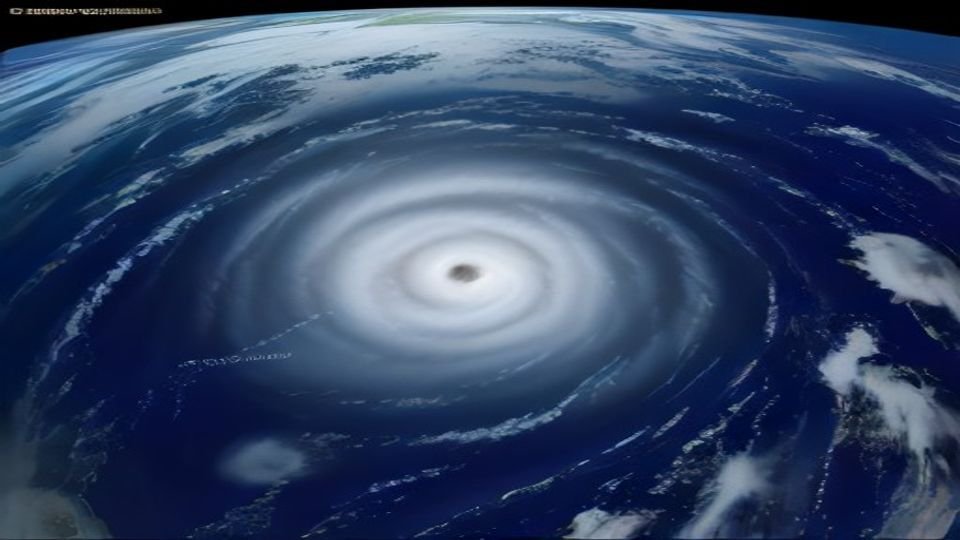
DeepMind and Google Research announced a breakthrough in cyclone forecasting with WeatherNext, an AI model that provides an extra day of predictive accuracy compared to previous approaches. According to a Nature paper, the three-day forecasts from WeatherNext match the accuracy that earlier models could only achieve for two-day predictions, representing roughly a decade’s worth of meteorological progress.
Tropical cyclones—also known as hurricanes or typhoons—have caused more than 700,000 deaths and $1.4 trillion in economic losses globally over the past 50 years, making accurate, timely forecasts critical for life-saving preparations.
WeatherNext addresses a longstanding challenge in meteorology: cyclone forecasting traditionally required two separate modeling approaches. Global atmospheric currents that determine a cyclone’s track required coarse global models, while the intense, localized thermodynamic processes driving intensity needed higher-resolution local models. WeatherNext combines these capabilities in a single AI model.
The model was trained on nearly 20 terabytes of global atmospheric data and the IBTrACS historical database spanning nearly 5,000 storms. It uses Functional Generative Networks to produce multiple predictions that capture weather’s inherent uncertainty. The system can generate a 15-day forecast in less than a minute on a TPU.
During the 2025 hurricane season, WeatherNext demonstrated real-world impact by helping the National Hurricane Center predict Hurricane Melissa’s rapid intensification and landfall in Jamaica, enabling advance warnings. The model has since been scaled to predict 1,000 possible scenarios for each cyclone to support forecaster decision-making.
Surprisingly, WeatherNext Cyclones achieves state-of-the-art accuracy using data at only 28×28 km resolution—100 times coarser than traditional models. A smaller variant, WeatherNext 2-mini, operates at 111×111 km resolution while maintaining strong performance, leaving open questions about how such accuracy is possible at lower resolutions.
Google is now open sourcing WeatherNext 2, WeatherNext Cyclones, and WeatherNext 2-mini, along with code and model weights, making them freely available for academic research, operational forecasting, and specialized local model development. The models are accessible through Weather Lab, where users can visualize predictions for temperature, precipitation, wind speed, and cyclone tracks.
Key facts
- WeatherNext’s three-day forecasts match previous models’ two-day accuracy—representing roughly a decade of meteorological progress
- The model trained on nearly 20 terabytes of atmospheric data and 5,000 historical storms from the IBTrACS database
- During the 2025 hurricane season, WeatherNext helped predict Hurricane Melissa’s rapid intensification and Jamaica landfall
- The model operates at 28×28 km resolution, 100 times coarser than traditional intensity-prediction models
- WeatherNext can generate 15-day forecasts in under one minute on a TPU and now predicts 1,000 scenarios per cyclone