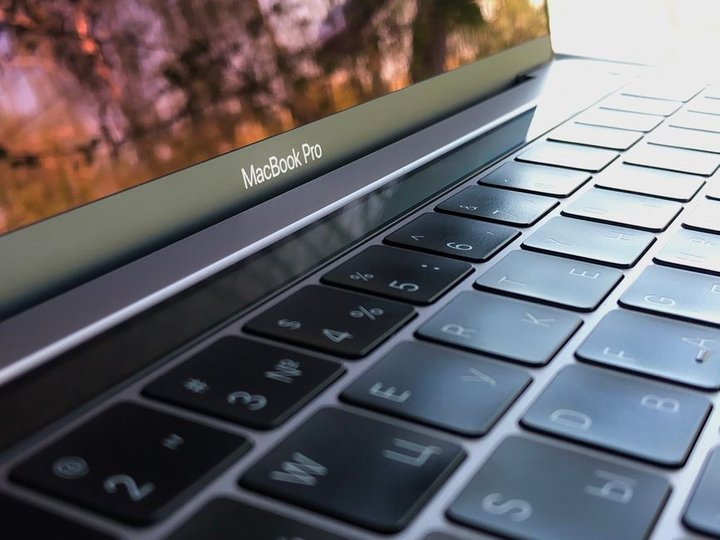
Namespace, a cloud infrastructure company, has begun deploying hundreds of MacBook Pros in custom datacenter racks to provide macOS instances on demand. According to the company’s blog, the unconventional approach became necessary because their customers need Macs to build and test iOS apps—a requirement Apple enforces, since the iOS Simulator and App Store distribution tools only run on macOS.
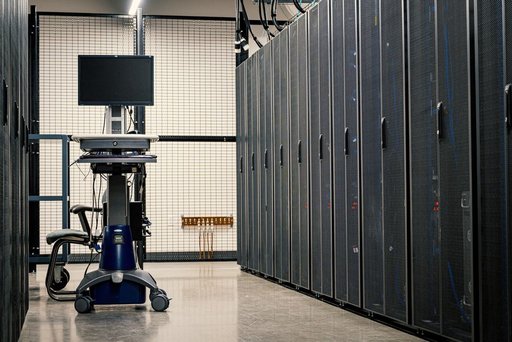
While Mac Minis would be a more natural fit for datacenter use, Namespace encountered severe supply chain constraints. The company ordered Mac Minis in January but did not receive them until July. Additionally, Apple staggered CPU releases across product lines, with Mac Mini waiting 10 months for M5 cores. To meet customer demands for current hardware and latest Xcode versions, Namespace pivoted to MacBook Pros as the foundation for their infrastructure.
Each MacBook is integrated into a custom rack with several management layers. IP KVM (keyboard-video-mouse) switches provide remote access—essential because MacBook firmware is designed around a physical screen, requiring GUI interaction for certain maintenance tasks. The company added external 10-gigabit Ethernet NICs to replace laptop networking, along with custom cable management and heat-dissipation holders designed to prevent thermal issues.
The deployment revealed unexpected pain points. HDMI cables proved unreliable, frequently disconnecting; Namespace identified specialized cables and exhausted the available Amazon supply. FileVault disk encryption posed a bigger challenge: after unplanned reboots, password prompts appear only on external screens and disappear after five minutes, making remote recovery difficult. The company discovered that macOS’s fdesetup authrestart command can bypass this issue. External USB NICs also occasionally stopped responding, requiring deletion and recreation of network services in macOS settings to restore functionality.
Namespace notes that Mac Minis and Studios arriving with M5 and M6 chips will be easier to manage. These devices have built-in 10 Gb networking, auto-boot after power loss, and support fully automated configuration via Mobile Device Management (MDM). The company designs custom shelves for these machines based on airflow simulation.
Under the hood, Namespace runs instances on virtual machines using Apple’s Virtualization framework. However, a significant limitation constrains the approach: Apple restricts each physical Mac to running only two guest macOS VMs simultaneously, regardless of CPU cores or memory. This caps instance configurations at 6-core and 12-core on 14-core Mac Minis, and 8-core and 16-core on 18-core MacBooks, with some cores reserved for management.
Key facts
- Namespace deployed hundreds of MacBook Pros in custom datacenter racks to provide macOS instances for iOS app development
- Mac Mini supply constraints (January order, July delivery) and staggered CPU releases drove the decision to use MacBooks instead
- Each MacBook connects to IP KVM for remote management, 10G Ethernet NICs, and custom cooling holders with careful cable management
- HDMI cables proved the most unreliable component; FileVault encryption required workarounds for unplanned reboots; USB NICs occasionally needed network service recreation
- Apple’s Virtualization framework limits each physical Mac to running only two guest macOS VMs, capping instance sizes at 6/12-core on Mac Minis and 8/16-core on MacBooks