
The new documentary “You Can See Everything,” directed by Lance Oppenheim and Nathan Fielding, prompted strong reactions in theaters—but not necessarily the ones viewers expected. According to a review on The Profile, the film functions as both a documentary about Elizabeth Holmes and a demonstration of how filmmaking techniques can deceive audiences.
Holmes was the founder of Theranos, a blood-testing startup. According to the source, she was acquitted of all four charges related to defrauding patients but is imprisoned because a jury found she knowingly misled investors who contributed more than $700 million to the company. The source notes this distinction is often lost in public discourse about her case.
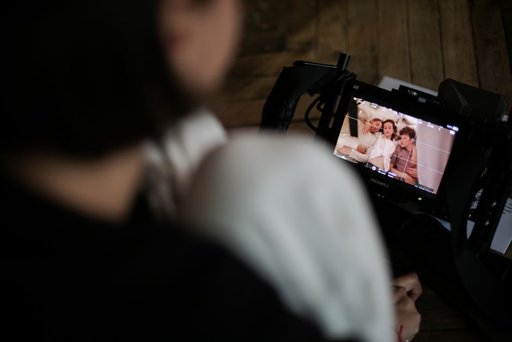
The documentary’s power, according to the review, lies in its sophisticated use of visual storytelling. Directors manipulate viewer perception through close-up shots, wider framing, editing choices, and the sequencing of information revealed. The review describes how the film cycles through different framings of Holmes and those around her—presenting her as sinister, then human, then potentially manipulated, then sincere—causing audiences to repeatedly shift their sympathies.
Filmmaker Nathan Fielding, who lived with Holmes and her family for a month before she went to prison, appears throughout the documentary, raising questions about his reliability as a narrator. The review questions whether his proximity to Holmes influenced how the story was presented.
The source argues this approach reveals a fundamental psychological pattern: people form emotional impressions first, then construct beliefs around those impressions, and finally search for supporting facts. Beliefs built on emotion are difficult to challenge through reason, according to the review.
The review compares the documentary’s technique to a Canon photography experiment from 2015, in which six photographers took different portraits of the same man after being given different descriptions of him—resulting in wildly different images. A Canon representative stated that “a photograph is shaped more by the person behind the camera than by what’s in front of it.”
Key facts
- Holmes was acquitted of charges related to defrauding patients but convicted of misleading investors
- Investors contributed over $700 million to Theranos
- Director Nathan Fielding lived with Holmes for a month before she went to prison
- The documentary uses camera angles, editing, and information sequencing to shift viewer perception