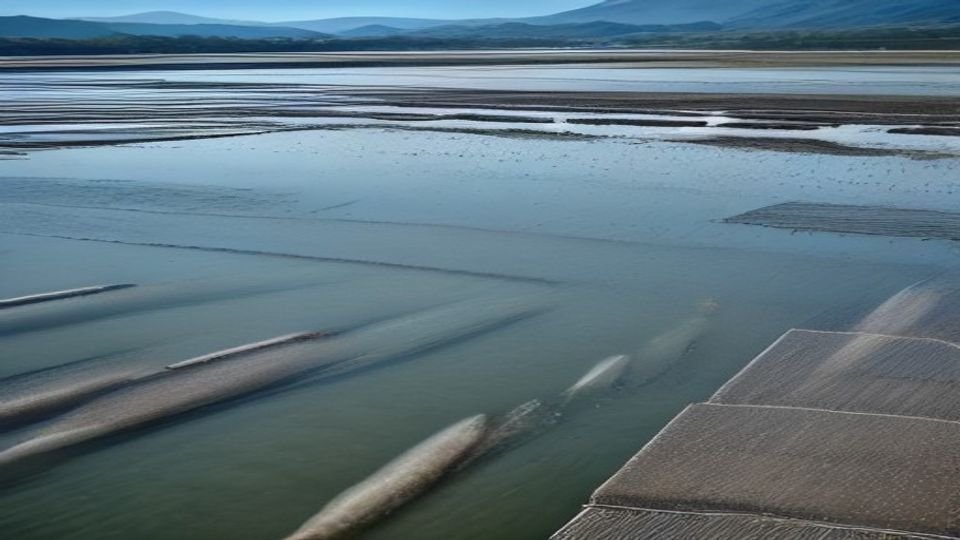
Extreme drought and scorching heat across Europe this summer have ravaged ecosystems and businesses throughout the region, with the fishing industry hit especially hard. According to Fortune, damage has been estimated in the millions of euros, compounding already severe problems with energy and water supplies, devastated crops, losses in river traffic and trade.

In Hungary, around 99% of the country’s lands are currently under severe or extreme drought conditions, according to the national meteorological service. Desertification—a process where vegetation recedes due to high heat and low rainfall—threatens much of the Great Hungarian Plain. Hungary’s Agriculture and Food Economy Ministry reported that persistent heat and water shortages led to 1,588 hectares of fish ponds drying out, causing the deaths of nearly 280 metric tons of fish at 20 farms. The estimated revenue loss from this damage was 1.3 billion forints ($4.2 million), with producers saying that replacing lost fish could take years.
In Romania, fish farmers cultivating carp face compounded challenges. According to Catalin Platon, president of ROMFISH National Association of Fish Producers, this year’s heatwave follows severe droughts in 2023 and 2024. Since carp production cycles are three to four years long, losses from 2023 continue to have yearly impacts. Water-use policies that prioritized irrigation for agriculture during previous droughts left fish farmers without adequate water supplies.
Czech fish farmers have implemented emergency measures including reducing or suspending feeding to conserve oxygen, aerating ponds, and draining them when necessary. According to the Czech Fishing Association, while sustained rainfall could ease immediate crisis conditions, long-term measures are needed to retain more water in the landscape.
In Bosnia, trout farms face particular pressure since trout require cold water with high oxygen levels. Veljko Budjen, who owns a trout farm near Trebinje, explained that hot and dry summers force producers to reduce trout production and feeding to keep the business barely operational. One option he mentioned is adding liquid oxygen to water during summer months.
In eastern Slovenia, emergency teams have pumped 8 million liters of water into Lake Pristava to prevent mass fish suffocation from lack of oxygen and water chestnut overgrowth. Firefighters fear the effort may still be insufficient. In Serbia, fishermen reported that small boats stand idle on cracked ground in a shriveled Danube side channel, with fish confined to shrinking ponds where water temperature exceeds 30 degrees Celsius. Scientists have tied these extreme weather events to human-induced climate change, prompting countries and businesses to consider ways to minimize effects of future crises.
Key facts
- Hungary reports 99% of its land under severe or extreme drought, with 1,588 hectares of fish ponds dried out and 280 metric tons of fish dead at 20 farms
- Romania’s fish farmers face compounded losses from droughts in 2023 and 2024, with carp production cycles of three to four years extending the damage
- Lake Pristava in Slovenia required emergency pumping of 8 million liters of water to prevent mass fish suffocation
- Water temperatures in Serbia’s Danube side channel exceed 30 degrees Celsius, endangering juvenile fish populations
- Czech fish farmers report needing long-term water retention measures beyond immediate emergency interventions