
According to the essay published on Manuel Darcemont’s personal website, the author’s great‑great‑grandfather worked as a farrier in the village of Mandres‑en‑Barrois in rural France. He shoed horses and repaired farmers’ carts. After observing a car drive through a nearby town—or reading about it in the newspaper—he decided to become a mechanic. The author notes that, after a period of adjusting to the change, his great‑great‑grandfather retained the same underlying purpose: helping people get around, but shifted from horse‑based technology to engine‑based technology.
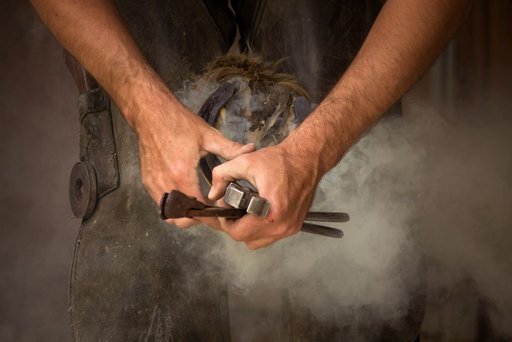
The essay goes on to describe how this occupational shift persisted through subsequent generations. The author’s father worked as a mechanic and reportedly loved the job as if it had always been part of the family tradition. The author draws a parallel to families in the same village that continue to farm the same fields today, suggesting that continuity of purpose can survive changes in the tools used to achieve it.
The author then connects this family history to contemporary concerns among software developers. He observes that many developers today worry about being replaced by artificial intelligence, a fear that mirrors the apprehension felt by his great‑great‑grandfather when confronted with the automobile. The essay points out that such anxieties are not unique to the current era; similar worries arose when tractors replaced horse‑drawn farming and when automobiles supplanted farriery.
While acknowledging that not every farrier became a mechanic, the author suggests that the core motivation behind his family’s work—and perhaps behind many developers’ work—lies not in the specific technology used but in the broader desire to make things, solve problems, and see others benefit from those creations. He recalls that many developers decided they wanted to work in technology before learning to code, driven by interests such as creating video games or websites.
The essay concludes with a reflective note: being willing to let go of the “how” (the specific tools or methods) while holding on to the “why” (the underlying purpose) may help individuals navigate technological change. The author presents this as a personal perspective rather than a universal claim, emphasizing that his great‑great‑grandfather’s story offers a point of reflection rather than proof of any broader trend.
Sources: https://manuel.darcemont.fr/posts/the-last-time-my-family-was-replaced-by-technology/