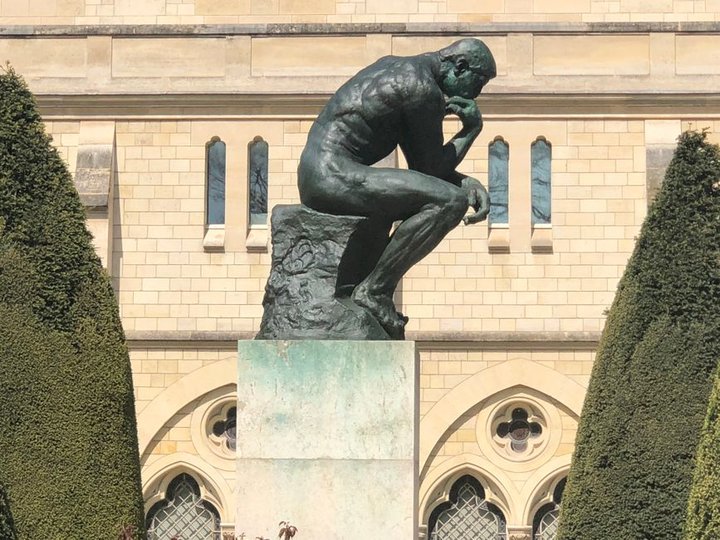
According to the source text, the author began requesting 3D scans of Auguste Rodin’s sculptures from the Rodin Museum in 2017, seeking public access to what are described as ultra high‑resolution laser‑scanned point cloud documents in open plaintext formats. The museum’s administrators responded with what the author characterizes as a sustained campaign of lies, weaponized incompetence, and open lawlessness. When civil rights advocate Alexis Fitzjean Ó Cobhthaigh submitted a formal request, the museum consulted the French government’s Commission on Access to Administrative Documents (CADA). The source says CADA’s opinion favored the request, finding the scans to be administrative documents that must be made publicly accessible. The museum’s director reportedly told the Ministry of Culture in writing that she intended to ignore French freedom of information law and force the requester to go to court.
In 2019, the author, Fitzjean Ó Cobhthaigh, and the advocacy groups Communia, Wikimédia France, and La Quadrature du Net filed suit in the Administrative Tribunal of Paris. The source notes that the Paris tribunal rejected the museum’s arguments concerning trade secrecy, counterfeiting, its business model, revenue, and intellectual property. In December 2023, the tribunal ruled that 3D scans in various formats are administrative documents and must be made available to the public. It also ordered the museum and the Ministry of Culture to provide the scans to the author and to pay him €1,500 for his trouble. The source emphasizes that the museum and ministry simply ignored this court order; they did not appeal it.
The author’s appeal proceeded to the Conseil d’État, France’s highest administrative court, where representation by specialist avocats au Conseil d’Etat et à la Cour de cassation is mandatory. The source explains that the appellants presented expert testimony from academia, industry, and the arts, demonstrating that cultural heritage institutions worldwide routinely use and publish point cloud documents, and that the French government itself publishes petabytes of open source point cloud data from its national aerial surveys. They also pointed to the Ministry of Culture’s own guidance on the proper formatting, use, and accessibility of open format point cloud documents.
Despite this evidence, the source says the Conseil d’État, on its own initiative, raised a new argument that had not been advanced by the museum: that point cloud documents are not even administrative documents. The source indicates that the high court proceeded to consider this novel claim, effectively undermining the lower court’s ruling and the author’s efforts to obtain the scans. The narrative concludes that the museum’s earlier falsehoods about the scans’ usability and the alleged risk of counterfeiting were tolerated, and in some instances rewarded, by the judiciary.