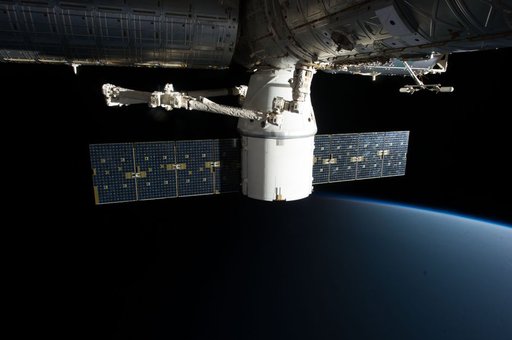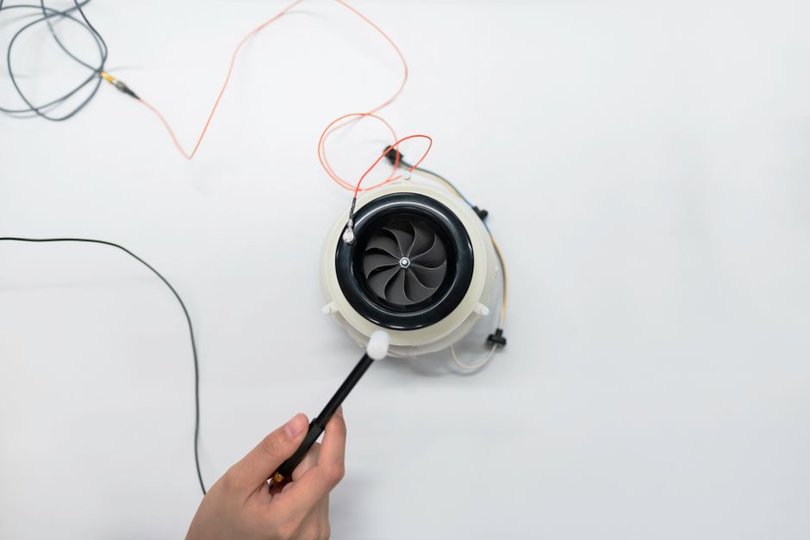
Google’s Project Suncatcher, described as a long‑term research moonshot announced last year, seeks to determine whether low‑Earth orbit can one day host scalable machine‑learning infrastructure. The first concrete step is a prototype satellite that will launch aboard SpaceX’s Transporter‑18 rideshare mission, developed in partnership with Planet, to assess how Google Tensor Processing Units (TPUs) behave in the space environment. According to the blog post, the satellite will undergo a rocket trip that lasts about 10 minutes, during which it experiences vibration and sustained acceleration loads up to 10 times the force of gravity, with individual components such as the TPU chips potentially facing forces of 50 to 100 g. The team conducted vibration testing by shaking the satellite on all three axes to mimic launch frequencies and reported that the hardware held up to the force, a result they described as pleasantly surprising. Once in orbit, the TPUs will encounter radiation levels far higher than on Earth. To prepare, the team tested the chips in a proton beam facility at UC Davis’s Crocker Nuclear Laboratory while running AI workloads, monitoring for errors such as bitflips. Initial results indicated that the Trillium TPUs can survive a radiation total ionizing dose greater than what they would receive during a five‑year space mission. The blog notes that some effects can only be measured in orbit, so the upcoming launch will provide crucial data for future designs. Cooling presents another major challenge: in the vacuum of space there is no airflow, so heat must be dissipated via radiators. Google is experimenting with heat pipes and radiators, having already tested the technology in a thermal vacuum chamber that simulates space’s thermal and vacuum conditions. The satellite will allow the team to see how the cooling system performs in orbit and refine the design based on those results. For future constellations, each satellite could carry dozens of TPU chips and communicate with neighbors via laser links to maintain the high bandwidth needed for AI workloads. The blog explains that while laser communication exists in space, current systems are optimized for low bandwidth over long distances; Project Suncatcher requires high bandwidth over extremely short distances, demanding extraordinary precision akin to hitting a coin‑size target from miles away while both points move. Tests of this laser interconnect are planned for 2027 when two satellites will be placed in orbit. The project team emphasizes that this first launch is about learning what works, identifying failure points, and applying those lessons to subsequent missions, following the pattern of earlier Google moonshots such as autonomous driving and quantum computing. As the prototype heads to the launchpad, the team says it is eager to share the science and engineering insights gained from the experiment.