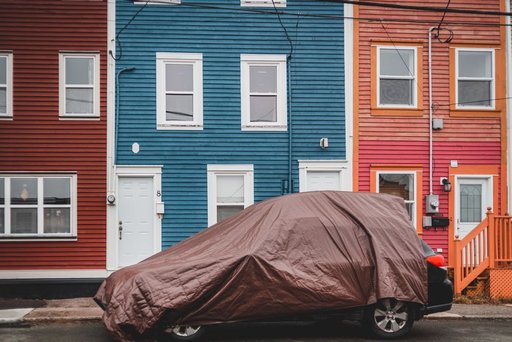
The author recalls asking friends from affluent backgrounds what they consider a “crappy” car, noting that their answers differed from her own definition of a vehicle that cannot be taken on the highway or has multiple non‑functioning doors or windows. According to the essay, when a car nears the end of its life, people often first ask friends or friends of friends for a vehicle, trusting that such contacts will not sell a lemon. If a car is needed quickly, buyers may go to parts of town with many mechanic shops, where lots sell cars ranging from $1,500 to $10,000 and sometimes offer junkers for parts. The author’s parents wanted her to buy a $2,000 Honda Civic, but she chose a $3,000 car she thought was cuter, paying the seller—Mario, a friend of her grandmother—directly in installments without a bank loan or credit check. The source notes that her parents knew how to judge cars at that price, providing the combination of knowledge and a trusted contact that, in her view, mirrors how well‑off families secure summer internships. Regarding what makes a car “crappy,” the author writes that status still exists but the focus shifts to whether the car runs and can be taken on the freeway; minor issues such as a back door that only unlocks from the inside, a door that does not lock, or loose interior lining are considered cosmetic and not reasons to discard a vehicle. A car becomes crappy only when the annoyance of its problems becomes constant. The essay observes that most cities have a bustling market for cars priced between $1,000 and $6,000, estimating that about 40 % of Americans—the bottom two quintiles—rely on this segment. It adds that rising new‑car prices squeeze middle‑class households, while many banks refuse to write loans for $3,000 vehicles, making car debt inaccessible to those with unsteady income and leaving the bottom quintile unable to even reach a $1,000 car, which hinders job access. The 2009 U.S. government program that offered roughly $4,000 to scrap a functional, insured, and registered car is cited as having removed about 690,000 usable vehicles from the market, effectively raising prices for the oldest used cars by taking supply away from buyers who depend on them. The author describes Mario’s lot as specializing in vehicles under $8,000; after his death, the lot shifted toward $12,000 cars, and his father never returned. Other low‑price lots operate on personal relationships that take time to build, acting as community infrastructure for a few thousand people in El Paso. Finally, the essay mentions a strategy used in Memphis of purchasing trap cars—vehicles impounded by police, often for unpaid tickets or missing plates—that tend to have good mechanical condition and exterior appearance, allowing the author to buy a 1994 Oldsmobile Cutlass Supreme for $800 that lasted through college.