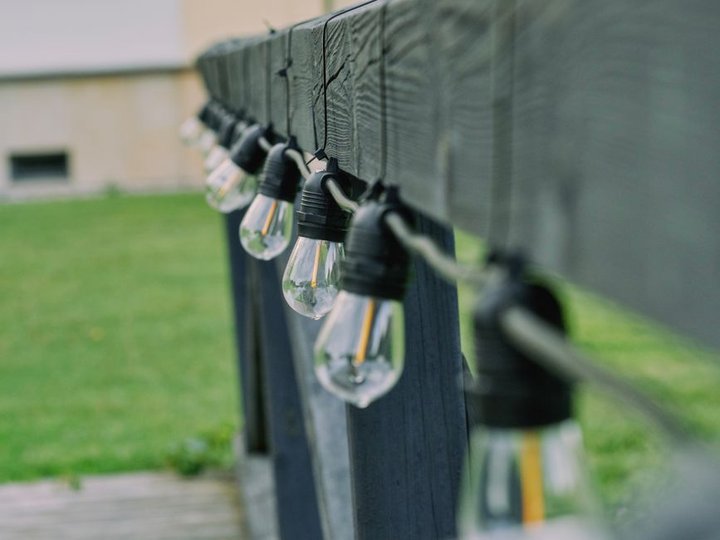
For decades, swarms of insects circling outdoor lights at night were a common sight, useful enough that entomologists relied on the phenomenon to conduct surveys. But as LED lighting replaces older technologies, that pattern has largely disappeared.

According to a 2024 BBC article cited in the source, insects navigate using moonlight, orienting themselves so the light shines on their backs to stay upright in flight. Since moonlight contains ultraviolet (UV) and infrared wavelengths, insects have evolved to respond to UV as a navigation cue, believing it to be the moon. When artificial lights emit UV, insects orient toward them and circle, even flipping upside down when lights point skyward. Incandescent bulbs transmit UV, but LEDs do not, making them far less attractive to insects.
A 2016 study by scientists at the University of Bristol tested four light types: incandescent, compact fluorescent, cool-white LED, and warm-white LED. The researchers found that LEDs attracted significantly fewer insects than other sources, with no meaningful difference between cool and warm white LEDs. The study noted that fewer flies and Culicoides midges were attracted to LEDs compared to traditional lighting.
The difference stems from how LEDs function. Unlike older bulbs that waste energy producing ultraviolet and infrared wavelengths invisible to humans, LEDs convert electrical energy almost entirely into visible light (400–700 nanometers), making them more energy efficient but far less visible to insects.
One guide on a birding trip in Veracruz observed this shift firsthand. His family’s outdoor dining area was once visited by geckos that fed on insects attracted to their lights. After switching to LEDs, insects no longer congregated around the lights, and the geckos stopped appearing.
The reduction in insect attraction to artificial light carries ecological significance. According to the source, UV artificial light at night has been identified as a major driver of insect population decline worldwide. However, the source notes that LEDs may solve one problem while creating another: white LEDs produce a spike of blue light (450–465 nanometers) that may disrupt circadian rhythms in both nocturnal animals and humans.
Key facts
- Insects navigate using moonlight and mistake ultraviolet light for the moon, causing them to circle sources of UV radiation
- Incandescent bulbs emit UV light while LEDs emit very little, making LEDs far less attractive to insects
- A 2016 University of Bristol study found LEDs attracted significantly fewer insects than incandescent, fluorescent, and other traditional light sources
- The shift to LED lighting has reduced insect populations around outdoor lights, affecting the food chain for animals like geckos
- Artificial UV light at night is considered a major driver of global insect population decline