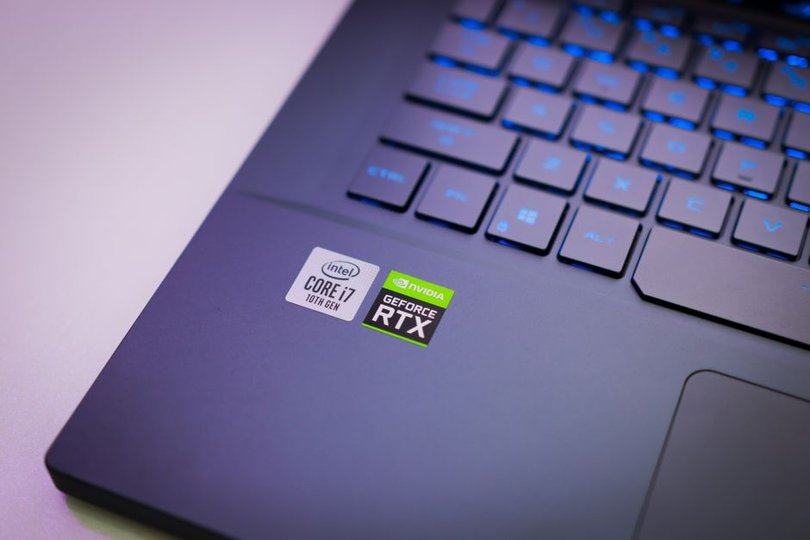
Linux can run on Nvidia RTX Spark laptops like the MSI Prestige N16 Flip AI Plus with GPU acceleration, but users face a critical performance penalty that depends on power source.
According to testing documented on mindstudio.ai, when the laptop is plugged into wall power, the GPU clock speed drops to approximately 780 MHz on Linux compared to 2+ GHz on Windows. This manifests as a dramatic inference slowdown: on a 120 billion parameter model, Windows achieved 65.4 tokens per second while native Linux managed only 13.9 tokens per second—roughly 21% of Windows performance.
The slowdown reverses when unplugged. On battery power, Linux reaches 61 to 67 tokens per second, comparable to Windows. This asymmetry points to a specific culprit: Nvidia’s Platform Controllers and Framework, a Windows-only component visible in Windows Device Manager that manages the shared power budget between CPU and GPU.
The root cause is encryption. The firmware supplies this controller with a power settings table that is encrypted. Windows possesses the decryption key; Linux does not. Testing confirmed this by disabling the controller in Windows, which reproduced the slowdown directly—token rates dropped from around 83 to 31 per second, and clock speeds fell to 786 MHz, matching the Linux behavior. Re-enabling the controller immediately restored normal speed.
Despite these constraints, Linux installation itself is feasible. Using Debian or Omarchy distributions with Nvidia’s open-source driver, users can achieve a full desktop at 4K and 120Hz with working audio, keyboard, and touchpad, though installation requires workarounds including a USB Ethernet adapter and adjusting GPU memory allocation through Windows before booting Linux.
WSL (Windows Subsystem for Linux) currently offers a practical middle ground. It inherits Windows’ full GPU performance—hitting 65.1 tokens per second, nearly identical to native Windows—while running Linux-first AI tools like vLLM. A permanent fix requires Nvidia to port the platform controller’s power management logic into its Linux driver.
Key facts
- Native Linux on RTX Spark laptops achieves 13.9 tokens per second when plugged in versus 65.4 on Windows—approximately 21% of Windows performance
- GPU clock speed throttles to 780 MHz on Linux when plugged in, compared to 2+ GHz on Windows
- The throttling is caused by encrypted firmware in Nvidia’s Platform Controllers and Framework component, which Linux cannot decrypt
- Performance normalizes to 61-67 tokens per second on battery power, suggesting the issue is power management-specific, not thermal
- WSL achieves near-Windows performance (65.1 tokens per second) by running on the Windows driver stack