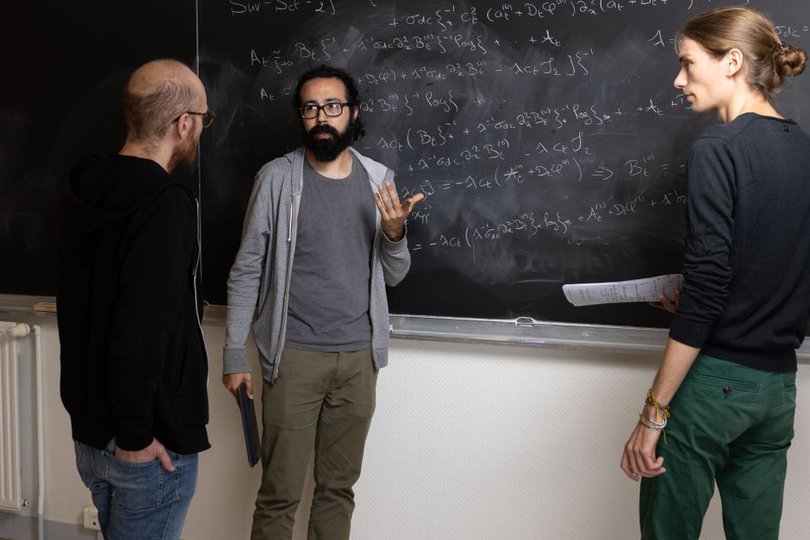
Large language models and AI systems have demonstrated remarkable abilities in generating mathematical proofs, according to a post on Terry Tao’s blog by mathematician Francesco Maggi. Recent LLM-generated proofs include constructions related to the Navier–Stokes equations and proposed solutions to the quasi-Riemann Hypothesis, which Maggi says deserve serious attention from the mathematical community.
However, significant challenges remain. LLMs appear most effective when writing proofs in Lean, a proof assistant that allows computers to verify formal arguments. For difficult theorems, these Lean proofs can reach hundreds of thousands of lines of code. According to Maggi, a notable problem emerges: as Lean proofs grow longer, their machine-generated natural language translations become increasingly messy and unfaithful to the original proof. “We don’t understand why LLMs seem so bad at doing this kind of translation, but, as of today, they seem to really struggle with that task,” Maggi writes.
This limitation raises a fundamental question: whether proving theorems matters if humans cannot understand the proofs. Maggi argues mathematics is fundamentally a human endeavor rooted in human cognition and culture. “Without humans who understand mathematics, there is, quite literally, no human mathematics—a fundamental part of human culture,” he states. This suggests that rather than mathematics becoming obsolete, society would need more mathematicians to interpret and understand LLM-generated results.
Maggi emphasizes the need for scientific skepticism about LLM capabilities. While their performance is extraordinary, he cautions against overinterpreting this as evidence of machine intelligence or consciousness. Instead, evidence suggests LLMs excel at recombining existing intellectual structures and discovering connections across scientific literature at scales individual researchers cannot match.
One open question concerns the relationship between LLM success and the volume of existing literature on a problem. Both the Navier-Stokes equations and Riemann Hypothesis have vast bodies of work from hundreds of mathematicians. According to Maggi, OpenAI’s October 2026 release attempted 4,000 problems with success on only some hundreds, raising questions about which problems LLMs fail on and why—information that could guide more effective human-AI collaboration.
Maggi outlines two possible futures: a “golden age” where LLMs are carefully integrated into STEM ecosystems to empower new scientists while preserving independent human inquiry, or a “dark age” where scientific output increases spectacularly but independent human scientific activity weakens and knowledge becomes concentrated and incomprehensible. He suggests reality will likely combine elements of both scenarios.
Key facts
- LLMs can generate formal proofs in Lean reaching hundreds of thousands of lines for difficult theorems
- Machine-generated natural language translations of these proofs struggle with fidelity and readability as proof length increases
- Maggi argues mathematics without human understanding loses its meaning as a human cultural endeavor
- LLMs excel at recombining existing intellectual structures and discovering connections across scientific literature at unprecedented scales
- OpenAI’s recent release attempted 4,000 mathematical problems but succeeded on only some hundreds