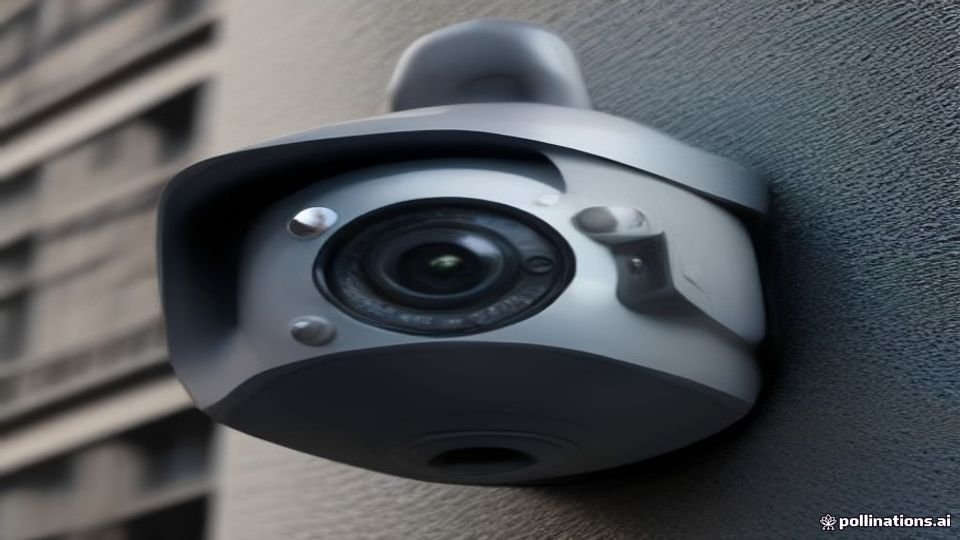
The source reports that, during the summer, hundreds of small eyeball‑shaped surveillance cameras were installed across the MIT campus, with Building 1 receiving six to seven cameras per floor and more than 500 cameras noted elsewhere. The cameras are positioned to face faculty offices and bathroom entrances, and some are placed close enough that their microphones could capture conversations inside those rooms. The source adds that MIT is exploring the addition of AI capabilities from Ambient.ai, which would allow users to search footage by natural‑language queries such as “show me all footage of the curly‑haired chemistry colleague going to the bathroom.” It notes that at the May 2026 Institute Faculty Meeting the administration acknowledged that AI capacities had already been tested on campus without the knowledge or consent of the community. According to the source, several faculty and staff have voiced concerns about the cameras. They describe the devices as intrusive, argue that monitoring movements, conversations, and bathroom use chills speech and protest, and invoke the Panopticon effect—where the possibility of constant, unverifiable surveillance leads people to modify their behavior. Critics also contend that more cameras do not necessarily increase safety, warn that authoritarian governments could misuse the data, point to documented gender and racial biases in facial‑recognition systems, and argue that the expenditure is wasteful. In response, the source describes a satirical initiative called the IBAISBIAOMITCORPICBBTC (the Initiative to Beautify the AI‑capable Surveillance Benevolently Installed by our Administrator Overseers and the MIT Corporation In Collaboration with Big Brother Tech Companies). The goal, as stated, is to beautify every AI‑capable camera on campus by attaching luxurious gems of many colors, thereby indicating support for the surveillance program. The source says the effort began in August 2026 and will continue as long as there are cameras without gems. A photograph accompanying the text shows a bedazzled camera in Building 10. The source notes that the gems are removable, that the project’s organizers are purchasing the stones out of their own pockets, and that each gem represents an “admiring appreciation” for the surveillance technology. The source further mentions that, amid budget cuts—including the cancellation of subscriptions to over 700 academic journals in the MIT Libraries—the administration has reportedly allocated millions of dollars to the surveillance system. It claims that only a handful of staff and faculty (said to be five) were consulted before the camera rollout, and that no input was sought from scholars who study AI, international students, undocumented individuals, survivors of intimate‑partner violence, transgender and non‑binary people, or communities of color. The satirical piece concludes by linking the cameras to the suppression of hacking culture, the possible automatic alerting of Cambridge police when certain activities are detected, and the enhancement of existing protest‑and‑demonstration rules to curb political expression. It also notes that the cameras could aid in enforcing posting policies, citing the 2025 MIT Arts Festival where an artwork about Indigenous history was removed for violating the postering rule.
Key facts
- Hundreds of small eyeball‑shaped surveillance cameras installed across MIT campus (6‑7 per floor in Building 1, >500 total)
- Cameras aimed at faculty offices and bathroom entrances; some close enough for audio capture
- MIT exploring AI capabilities from Ambient.ai for searchable footage
- May 2026 Institute Faculty Meeting: administration acknowledged AI testing without community knowledge/consent
- Faculty concerns: intrusiveness, chilling effect, Panopticon, safety doubts, authoritarian misuse, bias, waste
- Satirical IBAISBIAOMITCORPICBBTC initiative: attach colorful gems to AI‑capable cameras to show support
- Initiative started August 2026; gems removable; organizers self‑fund gemstones
- Budget context: MIT Libraries cutting 700+ journal subscriptions while millions spent on surveillance
- Administration consulted only a small number (≈5) of staff/faculty; no input from AI scholars, international students, undocumented, IPV survivors, trans/non‑binary, or communities of color
- Initiative linked to suppressing hacking, auto‑alerting police, strengthening protest rules, enforcing posting policies