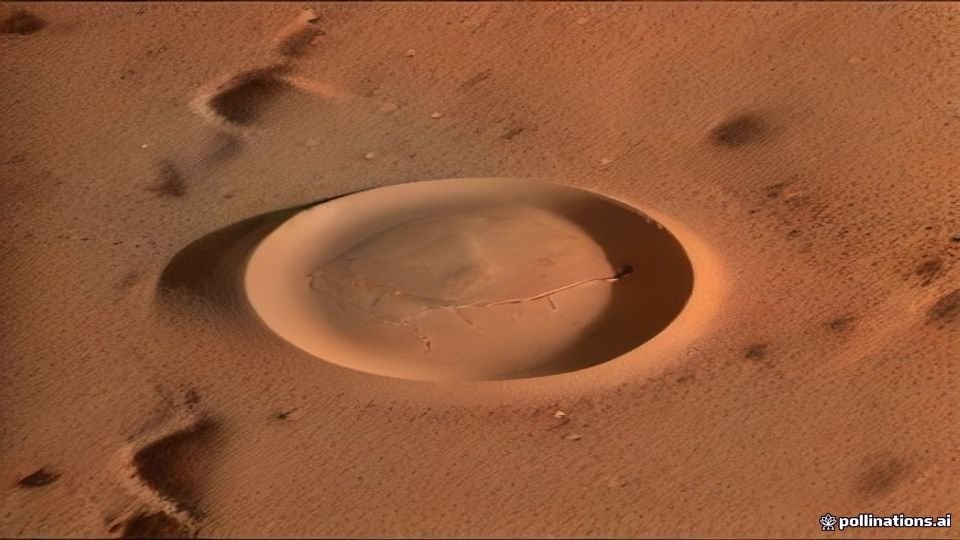
In 2005, archaeologist Jon Harman attended a conference on rock art when he encountered images of Mars processed using a NASA technique. The contrast struck him: one showed the planet’s familiar rusty-red surface, while another, created using a method called decorrelation stretch, revealed remarkable detail through striking mosaics of red, green, and yellow. Harman immediately recognized potential for studying ancient human artwork.
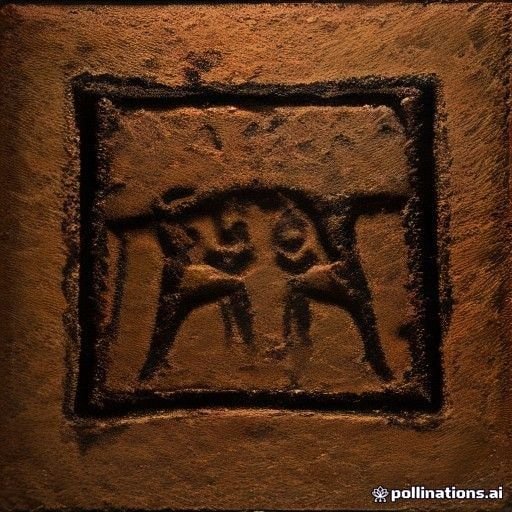
Decorelation stretch, developed by NASA’s Jet Propulsion Laboratory in 1978, enhances contrasts in digital imagery by mapping original colors to an expanded range rather than simply increasing contrast. The technique is based on the Karhunen–Loève Transform, a statistical method that concentrates signal information into fewer components. Jim Soha, a supervisor of a digital image processing group at JPL, first proposed applying this transform to digital imagery for color enhancement. In 1996, Ronald Alley, who worked in Soha’s group, refined the process to make it faster and more accurate.
After finding Alley’s paper online, Harman—who holds a PhD in mathematics from Berkeley and has experience in medical imaging—created the Dstretch software plug-in to adapt the technique for rock art analysis. He first tested it on photographs from Baja California, Mexico, revealing a yellow figure that had been invisible in standard images. “That convinced me of the usefulness,” Harman said. Since then, he has used the software to enhance hundreds of ancient rock art images.
The key to Harman’s success involved tailoring the technique to rock art by experimenting with different color spaces—ranges of numerically represented colors like the RGB system used on screens. The Dstretch plug-in includes custom color spaces specifically designed for rock art imagery.
Archaeologists worldwide have adopted Dstretch to make significant discoveries. At the ancient Egyptian cemetery of Beni Hassan, the software revealed images of bats and pigs, animals rarely depicted in Egyptian art. In Alberta’s Writing-on-Stone Provincial Park, researchers used it to identify a pictograph believed to be a Crow warrior’s calling card taunting Blackfoot enemies. At Norway’s Årsand 1 site, Dstretch uncovered approximately 15 previously undocumented figures and revealed new details in 28 others. Harman remains fascinated by the mystery surrounding ancient rock art creation, noting that researchers often don’t understand why people made these strange symbols.
Key facts
- Decorrelation stretch was developed by NASA’s Jet Propulsion Laboratory in 1978 for satellite and remote sensing imagery
- Archaeologist Jon Harman adapted the technique for rock art analysis using software called Dstretch
- The technology has revealed previously invisible figures across multiple continents, including bats and pigs in Egypt and pictographs in Canada