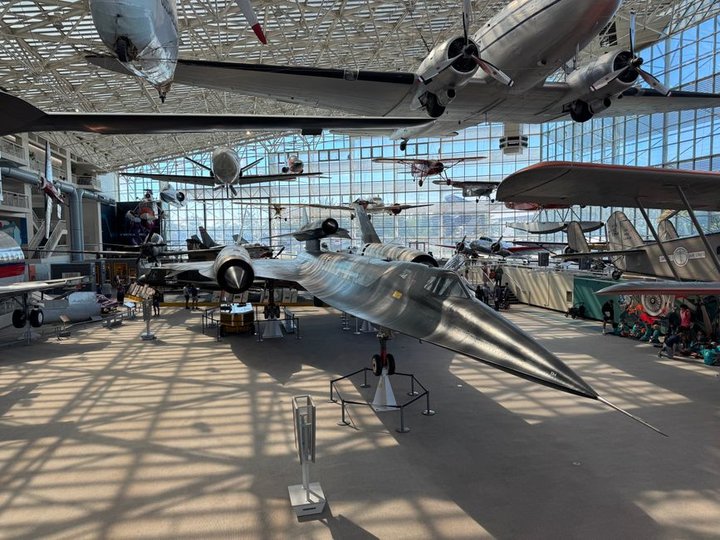
NASA has launched a secret effort to return a retired SR-71A Blackbird to flight after a nearly 27-year hiatus, according to Aviation Week. The agency approached several former test engineers with job offers over the summer, including Mike Relja, a retired U.S. Air Force and NASA test engineer, and Tim Conners, another former NASA SR-71A engineer.
David Ash, a former Navy and Joby test pilot hired as a special projects director for NASA, extended the job offer to Relja in August. When Relja asked about the project’s purpose, Ash declined to elaborate, according to the article.
The effort centers on SR-71A Tail No. 844, which made its final flight on October 9, 1999, at Edwards Air Force Base in California. NASA employees removed the aircraft from a display pole sometime before May 17 of this year, placing it inside a hangar that once housed the Space Shuttle. Inspection and work began on the aircraft following its removal from display.
NASA Administrator Jared Isaacman provided context for the project at the All-In Summit in Los Angeles on September 12-14, revealing an image of a new X-plane with the distinctive profile of the SR-71A’s inward-canted vertical tails and bulbous engine nacelles. Isaacman stated that NASA is “rebuilding our X-plane fleet” to pursue aeronautic breakthroughs.
Former engineers identified significant challenges. Relja noted that the 59-year-old airframe has been exposed to the elements for nearly three decades, likely accumulating water and sand in internal cavities. The engines have not been lubricated, rotated, or maintained since the final flight—a departure from the operational requirement of rotating spare engines every 90 days and running them every 180 days.
The Air Force and NASA destroyed a $600 million supply of Blackbird spare parts in 2007. Relja stated that restoring the aircraft would require access to the unique JP-7 fuel blend, triethylborane ignition chemical, specialized engine oil and hydraulic fluids, and bespoke ground equipment that no longer exists.
Despite these obstacles, Conners suggested potential solutions, including cannibalizing subsystems from retired Blackbirds displayed in museums across the U.S. and UK. He noted that the SR-71A featured an elegantly simple electronics architecture, and that existing Lockheed operational manuals remain available. Training pilots presented less concern, as NASA’s test pilots historically required minimal instruction after receiving aircraft from the Air Force.
Relja declined the job offer, expressing skepticism about feasibility. Conners also turned down the position despite supporting the project’s goal. NASA declined to confirm the return-to-flight project or provide additional details.
Key facts
- NASA removed SR-71A Tail No. 844 from display at Edwards AFB before May 17 and placed it in a hangar for inspection and work
- The aircraft last flew on October 9, 1999, and has been displayed since then
- NASA approached former SR-71A test engineers including Mike Relja and Tim Conners with job offers to work on the project
- The Air Force and NASA destroyed $600 million in Blackbird spare parts in 2007
- Major challenges include engine maintenance after 27+ years, availability of specialized fuel and fluids, and lack of trained crews and ground equipment
- NASA Administrator Jared Isaacman revealed an image of a new X-plane with SR-71A characteristics at the All-In Summit in September