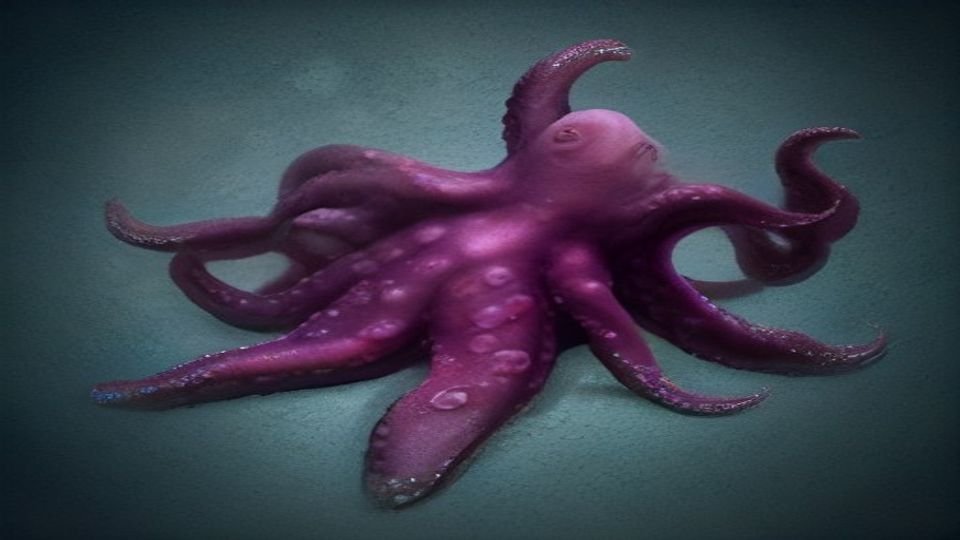
Scientists have discovered a mysterious genetic variation in certain octopuses that may help explain their renowned intelligence. According to a study published in Current Biology on August 17, the mutation affects ribosomal RNA (rRNA)—molecules that form a 3D scaffold for ribosomes, the cell’s protein factories—allowing octopuses to produce proteins with extreme accuracy.

The discovery came unexpectedly. About five years ago, Richard Han, then a graduate student at Harvard Medical School, was examining rRNA in tissues from the California two-spot octopus when he noticed an unusual gap that broke what is normally a single rRNA fragment into two pieces. Initial suspicions that the finding was a laboratory error were disproven through further testing. When researchers inserted the same break into the ribosomes of E. coli bacteria, the engineered cells produced proteins with about twice their usual accuracy.
To determine when this rRNA feature evolved, researchers compared two octopus groups that diverged more than 100 million years ago. Incirrates—shallow-water octopuses with developed nervous systems supporting complex behaviors—all possessed the rRNA break across five examined species. By contrast, a deep-sea cirrate, the dumbo octopus, lacked the gap. Squids, which diverged from octopuses approximately 300 million years ago, also did not have the mutation.
According to the research team, the findings hint that the rRNA adaptation may be connected to the evolution of shallow-water octopuses’ large nervous systems. Their brains, distributed throughout their bodies, expanded rapidly as these creatures adapted to compete with predators in their environment. Study co-author Rishav Mitra noted that neurons are long-lived cells, making protein misfolding particularly harmful to them. The rRNA break might prevent such misfolding and help neurons function properly.
However, researchers acknowledge that more evidence is needed. Joshua Rosenthal, a molecular biologist at the Marine Biological Laboratory uninvolved in the work, called the discovery “super interesting” but noted that additional research is required to prove whether the rRNA change actually drove the evolution of sophisticated brains and behaviors.
Beyond octopus biology, the study authors see potential medical applications. They suspect the findings could lead to therapies for neurodegenerative diseases like Alzheimer’s and Parkinson’s, which involve misfolded proteins in the brain. Study co-author Amy Lee expressed hope that drugs mimicking the octopus mutation could be designed to improve protein synthesis in human cells.
Key facts
- A mutation in ribosomal RNA was found only in shallow-water octopuses with expanded nervous systems and complex behaviors
- The rRNA mutation contains an unusual gap that breaks a normally single fragment into two pieces
- When inserted into E. coli bacteria, the same break doubled protein production accuracy
- The mutation was present in all five examined incirrate species but absent in a deep-sea cirrate and in squids
- Researchers believe the mutation may have evolved to support rapid brain expansion in shallow-water octopuses competing in crowded environments