
A independent scientist successfully replicated parts of a published protocol for making biological tissues transparent by soaking chicken breast in tartrazine solution, the bright yellow-orange food dye used in Doritos.
According to the source, the original research paper “Achieving optical transparency in live animals with absorbing molecules” demonstrated that tartrazine could render biological tissues like chicken breast transparent. The scientist conducted a modified version of this protocol at room temperature, using lower concentrations and shorter soaking times than the original study.
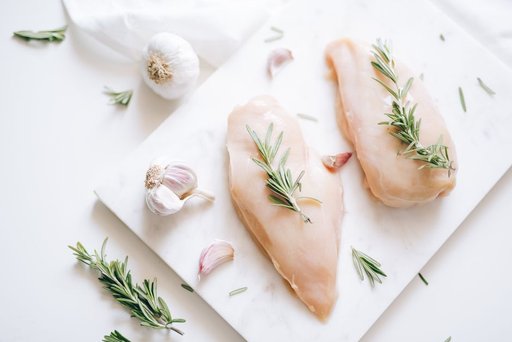
In the experiment, a 5mm thick slice of raw chicken breast was soaked in approximately 0.19 M tartrazine solution for 12 hours at room temperature. The researcher then cut a 2mm thick sample from this slice. Under a desk light, grid lines placed beneath the chicken became partially visible through the tissue, giving it a visual quality similar to gummy bears. A control sample soaked only in water remained completely opaque for comparison.
The original paper used a higher concentration (0.62 M) at 40°C with a machine shaker, but the researcher modified the protocol due to equipment limitations and safety concerns.
According to the source, the mechanism behind this transparency involves tartrazine altering the refractive index of water. By shifting the refractive index of water closer to that of protein and lipid solutions, the chicken tissue becomes more transparent. Biological materials are typically opaque for two reasons: light absorption and light scattering caused by different refractive indices within the tissue structure.
Tartrazine, also known as FD&C Yellow No. 5 or E102, is FDA-approved as food-safe and has a molecular formula of C16H9N4Na3O9S2. The researcher sourced it from a commercial supplier with greater than 80% dye content.
According to the source, this technique has applications for fluorescence imaging in live animals and could enable independent scientists to observe internal tissue structures more easily and at lower cost than conventional methods.
Key facts
- Tartrazine, the yellow dye in Doritos, can make raw chicken breast partially transparent when soaked in solution
- The modified protocol used 0.19 M tartrazine solution at room temperature for 12 hours, producing partial transparency in a 2mm thick sample
- The original research paper used higher concentration (0.62 M) and temperature (40°C) with mechanical shaking
- The transparency works by shifting the refractive index of water to match that of proteins and lipids in the tissue
- This technique could enable independent scientists to image internal biological structures more easily and affordably