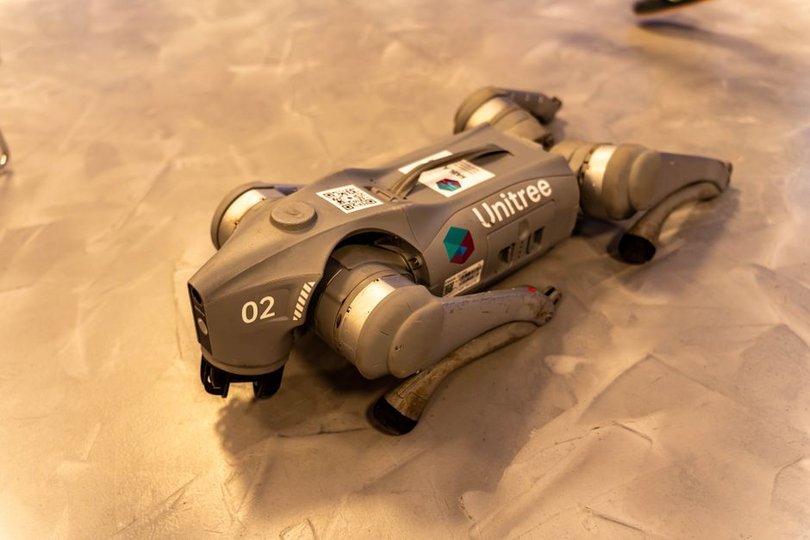
On a recent tour of Unitree’s Hangzhou factory, the reality of robot manufacturing diverged sharply from the narrative. Despite the company’s viral videos of humanoids assembling robots—which Unitree calls “an actual deployment”—the factory floor told a different story. In the building producing actuators (the motors driving each joint), only one or two new automated lines existed. The rest of the floor was staffed with humans operating traditional winding machines, wrapping copper wire around motor cores.
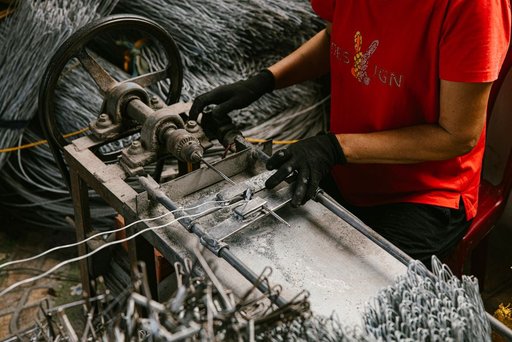
Unitree’s IPO prospectus acknowledged this, describing assembly as “currently mainly manual.” The economics explain why. At the end of 2025, all of Unitree’s machinery was worth approximately $1.7 million on its books for a company that produced nearly 32,000 robots that year—roughly $50 of machinery per robot. Labour accounted for just 8% of manufacturing costs, with most expenses going to parts. Halving labour costs saves only 4% of the total bill.
According to the source, Unitree made about 26,000 robot dogs in 2025, exceeding the roughly 20,000 units IDC estimates the world shipped the previous year. The company’s labour per robot had roughly halved since 2023 through scale, standardised processes, and more skilled staff—not machines.
Unitree is automating strategically: the motor line it’s building should cut labour per motor by more than half, yet reduce one robot model’s cost by under 2%. The company prioritises joint modules because they’re shared across robots. Meanwhile, the product itself keeps changing. Three quarters of Unitree’s humanoid revenue came from research and education in the first nine months of 2025, with under 5% from factories or industrial work. Until robots reach what Unitree’s slides project as a “ChatGPT moment” two to three years away, they remain largely research tools.
This frozen-product problem matters globally. A machine built for this year’s robot becomes scrap next year. By contrast, motors have stabilised—“like the AA battery in a toy that’s redesigned every Christmas,” as the source notes.
The implications flip dramatically across the Pacific. In America, factory labour costs roughly six times more than in China. At American wages, labour would represent about 40% of Unitree’s costs, not 8%. The same automation that saves 2% in Hangzhou would save roughly 9% in the United States. Facing restrictions—the FCC now requires new humanoids and robot dogs to be made in America with over 65% American parts by cost—Western manufacturers can afford automation that Chinese factories cannot yet justify.
Historically, this pattern has played out before. In 1964, when Mexican farmworkers were restricted, California mechanised tomato picking from 20% in 1965 to 99.9% by 1970. The tomato itself was bred tougher and squarer to fit the machine. Today’s robotics may follow a similar trajectory, with Western companies building the machines and developing the infrastructure to support rapid manufacturing scale.
Key facts
- Unitree’s Hangzhou factory relies primarily on human workers for motor assembly, not automation, despite viral videos suggesting otherwise
- Labour costs represent only 8% of Unitree’s manufacturing expenses; a proposed motor-line automation would save under 2% per robot
- Unitree produced approximately 26,000 robot dogs in 2025, exceeding global market estimates for the previous year
- Three quarters of Unitree’s humanoid revenue comes from research and education, with less than 5% from industrial or factory work
- American factory labour costs roughly six times more than Chinese labour, making automation there economically justified at 9% cost savings versus 2% in China
- The FCC requires new humanoids and robot dogs sold in America to have over 65% American parts by cost, effective immediately