The U.S. government has recently declassified information about a series of signals intelligence satellites with names like URSALA, RAQUEL, FARRAH, GLORIA, and CARRIE, according to an article in The Space Review. Significant details about these programs were released in the past two months, including previously secret space shuttle payloads.
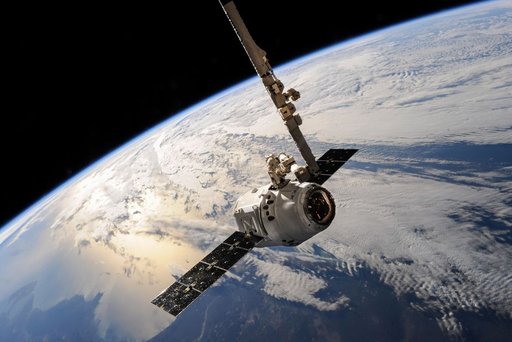
These small satellites, initially called “hitchhikers” and officially designated Program 11 (P-11), were built by Lockheed Missiles and Space Company. The program was redesignated as P-770B in 1965/66, then Program 989. Beginning in the 1970s, the National Reconnaissance Office (NRO) began standardizing the satellites and shifting their focus from serving top national leadership to supporting tactical military forces across the Army, Navy, and Air Force.
The satellites were designed to be inexpensive and could be developed in a year or less to respond to emerging threats. Their payloads were often custom designs, built only once or twice before being replaced. Program managers deliberately chose names based on movie actresses to avoid suggesting the satellites’ actual missions, according to the NRO documentation.
Because these satellites were carried alongside larger photo-reconnaissance satellites, they were limited in size, mass, power, and capability. However, they were engineered to pack maximum capability into their compact frames, featuring spring-loaded dishes deployed using centrifugal force.
The Program 989 satellites, operating under the designation Mission 7300 within the TALENT-KEYHOLE classification system, could intercept radar signals and geolocation data from low Earth orbit. They detected both main radar beams and weaker side lobes, enabling intelligence analysts to develop jamming and spoofing capabilities.
Unlike larger signals intelligence satellites launched to geosynchronous and highly elliptical orbits, the low Earth orbit Program 989 satellites provided global coverage from polar orbits and could serve new tactical users beyond traditional national-level customers like the CIA and NSA. The Vietnam War influenced this shift toward tactical support, as hundreds of American aircraft were shot down by missiles over Vietnam while detection of Soviet radar systems in the field had been limited.
Key facts
- URSALA, RAQUEL, FARRAH, GLORIA, and CARRIE satellites were recently declassified after decades of secrecy
- Satellites were designed to intercept radar signals and support tactical military forces worldwide
- Built by Lockheed Missiles and Space Company and designated Program 989 or P-11
- Named after movie actresses to conceal their intelligence mission
- Could detect both main radar beams and weaker side lobes from low Earth orbit
- Vietnam War accelerated shift from national-level to tactical intelligence support