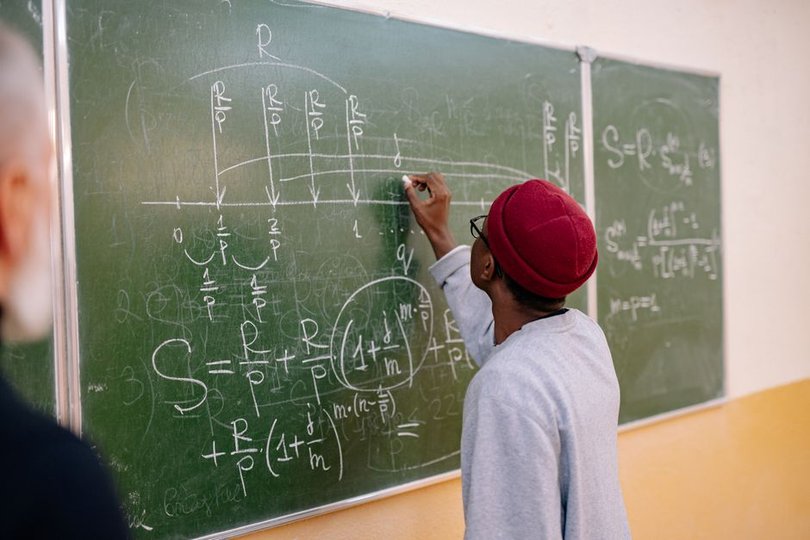
Richard Borcherds, a UC Berkeley mathematics professor and Fields medalist, has stopped grading student homework for correctness, citing the pervasive use of AI tools that allow students to consistently achieve top scores.
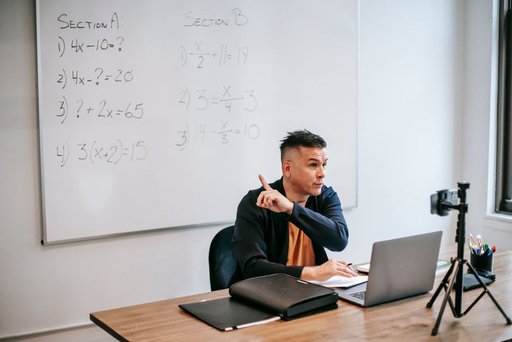
Borcherds revealed the change in a recent interview, noting he saw “no point” in paying readers to grade homework when AI use has become unavoidable. He now assigns grades based on completion rather than accuracy, though he acknowledged this is “not a very good system” and that he currently has no alternative approach.
The decision comes as AI capabilities in mathematics continue to advance rapidly. According to Borcherds, following OpenAI’s announcement that AI agents have apparently solved the Navier-Stokes existence and smoothness problem—one of mathematics’ most difficult unsolved problems—the implications for the field are profound.
“If AI continues to improve at present rate, then, in a few years, there’ll be nothing human mathematicians can do that AI can’t do better,” Borcherds said. This prospect has left him uncertain about whether to encourage students to pursue careers in mathematics, a field he previously considered one of the safest from AI disruption just five years ago.
When asked what advice to give prospective mathematicians, Borcherds said he consulted ChatGPT directly on the question. “Even ChatGPT said it didn’t have any idea what was going to happen,” he reported.
Borcherds noted significant institutional inertia in academia, predicting that mathematics departments may remain largely unchanged for several years despite rapid AI developments. He drew a historical parallel to academic publishing, where physical journals continue despite being “utterly pointless” for two decades.
However, Borcherds emphasized that this situation is unprecedented in mathematics. While technological disruptions have eliminated entire professions throughout history—hand weaving displaced by looms, horses replaced by motor cars—he described this as “the first time anything like this has happened in mathematics.”
UC Berkeley has begun addressing AI use in coursework. The Berkeley Division of the Academic Senate recommends that faculty include statements about AI tool expectations in course syllabi, according to Anne Marie Richard, assistant vice provost for undergraduate education. However, direct AI policies vary by course level and focus area.
The campus has tested AI detection tools including Turnitin and Rumi but determined they are inadequate for campus-wide standardization. Currently, AI policy decisions rest with individual faculty members, though the campus maintains a growing database of sample AI use statements in its AI Hub for syllabi.
Key facts
- Borcherds now grades homework on completion only, not correctness
- He cites widespread student use of AI achieving top scores as making traditional grading pointless
- OpenAI’s AI agents reportedly solved the Navier-Stokes existence and smoothness problem
- Borcherds questions whether to advise students to pursue mathematics careers
- UC Berkeley has tested but not standardized AI detection tools; AI policy remains at faculty discretion