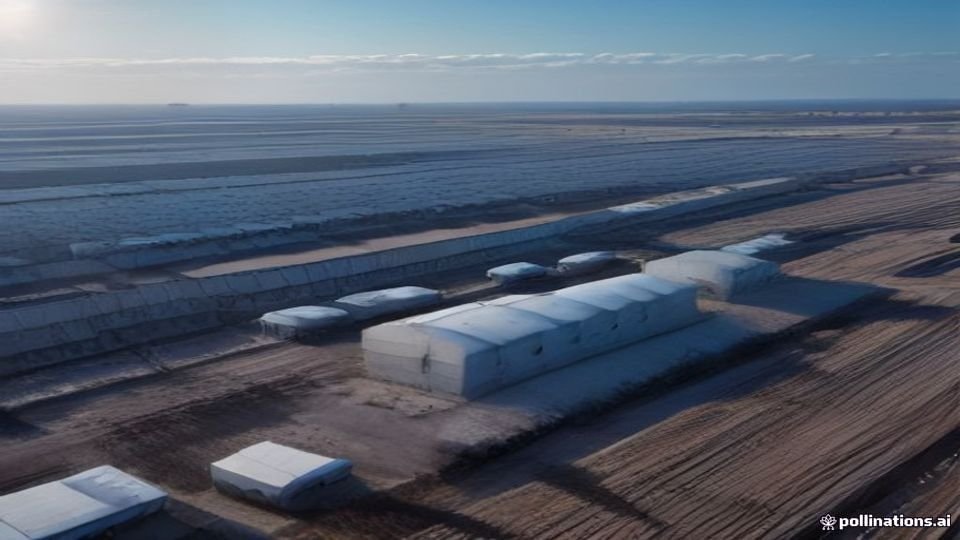
When Russian air strikes knocked out Ukrainian power plants earlier this year, most of Mykolaiv—a Black Sea port city 60 kilometers from Russian-occupied territory—lost access to fresh water. But in an easterly suburb, an off-grid solar field funded by the Danish government kept the underground pump operational, allowing residents to draw drinking water from their taps.

According to Olena Kondratiuk, project manager of Ecoclub, a non-profit assisting municipalities in obtaining renewables, the system generates enough electricity even during Ukraine’s winter months. The city has since expanded this approach: five solar-powered desalination systems convert saline or polluted water into drinking water, capable of supplying 250,000 residents with 1.2 million litres daily when paired with grid power during cloudy periods.
Russia has relentlessly targeted Ukraine’s energy infrastructure—primarily large thermal plants and the country-wide grid—to disable the war effort and harm civilians. Last winter saw the most severe attacks yet, striking coal, gas, cogeneration, and hydropower plants, leaving vast areas without reliable electricity and heat as temperatures dropped to minus 20 degrees Celsius. Economists estimate total damage to Ukraine’s energy sector now exceeds $56 billion.
Environmentalist Bill McKibben argues that Ukraine’s distributed power sources are “comparatively invulnerable to attack.” In drone warfare, centralized facilities are “sitting ducks,” while smaller, scattered generation sources with batteries are harder to target and repair faster. Jeff Oatham of DTEK, Ukraine’s largest energy investor, notes that destroying a coal station requires a single missile, whereas equivalent capacity damage to a wind farm would need around 40 missiles.
Ukraine is rapidly revamping its energy system, prioritizing security over climate goals. According to energy analyst Levgeniia Kopytsia at the Institute for Climate Protection, Energy and Mobility, the transformation emphasizes “decentralization, flexibility, and speed of recovery.” The International Energy Agency confirmed this past summer that Ukraine made “strong strides” in rebuilding system resilience.
The rollout has been led by rooftop solar, small-scale utility photovoltaic generation, local storage, and biomass. Before Russia seized three wind parks in 2022, Ukraine had 34 wind parks with around 700 turbines; the country now has seven gigawatts of wind power in the pipeline. On sunny days, Ukraine even boasts energy surpluses.
Households, businesses, and institutions have installed solar at unprecedented rates. Ukraine’s YASNO utility reports customers are rapidly purchasing solar and storage packages. The German Ukrainian Energy Partnership estimates Ukraine’s solar capacity potential over five years equals about 80 medium-sized nuclear reactors. Battery storage capacity also expanded significantly—the national grid operator invested in half a gigawatt of storage capacity last year, approaching a quarter of Germany’s total supply. According to the Financial Times, battery projects that take two years in Europe are completed in six months in Ukraine.
Key facts
- A solar field in Mykolaiv’s suburb powered by Danish funding provides fresh water via pump to residents when Russian strikes disabled centralized water systems
- Five solar-powered desalination systems in Mykolaiv can supply 250,000 residents with 1.2 million litres of drinking water daily
- Total damage to Ukraine’s energy sector exceeds $56 billion from Russian attacks on centralized infrastructure
- Destroying equivalent wind farm capacity would require approximately 40 missiles versus one for a coal power station
- Ukraine has seven gigawatts of wind power in the pipeline ready for deployment
- On sunny days, Ukraine generates energy surpluses from distributed renewable sources
- Ukraine’s national grid operator invested in half a gigawatt of storage capacity last year—nearly a quarter of Germany’s total storage supply